One morning in September, Anthony Hoover, who owns Bitterroot Valley Septic, was driving his pumper truck back to Victor after dumping a load in Helena. That’s about a 300-mile round trip to haul waste from septic tanks in Ravalli County to the wastewater treatment plant in Helena.
And it’s more than three times the distance Hoover used to travel to empty his rig—before the Missoula Wastewater Treatment Plant capped its monthly out-of-county septage intake. Missoula’s new limits, imposed in April, leave businesses like Hoover’s, especially in fast-growing Bitterroot Valley, well, up shit’s creek.
The new 60,000-gallon-a-month cap on out-of-county septage is 20,000 gallons less than what Hoover said his business alone used to bring to Missoula each month in the peak of summer. Now he’s driving back and forth to Helena as many as three times in a week. It costs “too much” to make those trips, he said, and it’s definitely just a “band-aid fix” until he finds an alternative.
Over the past five years, the amount of septage—the waste inside a septic system—coming to Missoula from outside Missoula County has steadily increased, particularly from the Bitterroot. In 2022, Ravalli County pumper trucks delivered more than 1.4 million gallons of septage, leading the Missoula Wastewater Treatment Plant to consistently exceed its previous out-of-county target of between 150,000 and 200,000 gallons each month.
Plant managers were forced to cut back, lest they risk upsetting the digester.
The digester is a giant 695,000-cubic-foot holding tank—about the size of eight Olympic swimming pools—that contains the biosolids from the sewer system and septage from septic tanks.
Septic waste is much more concentrated than what flows to the wastewater treatment plant from the sewer system, which is diluted by the water that goes down Missoulians’ drains. A propeller mixes it all up and bacteria in the digester breaks it down.
The plant charges $185 for an annual permit to dump septage or grease, plus 6 cents for every gallon dumped. That applies to in-county and out-of-county pumpers. Helena’s plant charges 8 cents per gallon, and that may rise to 9 cents in the coming months (though it doesn’t charge an annual permit fee).
Nate Gordon is the lab and pretreatment manager at the Missoula Wastewater Treatment Plant. He says that as out-of-county waste levels have increased, the amount of in-county septage has started to decline, in part due to Missoula’s sewer system expanding to new developments, while housing developments in more rural areas, particularly in the Bitterroot Valley, aren’t connected to a centralized collection system and require septic tanks.
“If out-of-county waste—septic trucks that are coming here—if that’s an upward trend, at some point there’s a breaking point where we just can’t keep feeding that high-strength waste into our digester,” Gordon said.
If the digester is “overfed,” as Gordon put it, it can become too acidic, start foaming, and the solids don’t break down at the right pace, which can cause it to overflow.
One alternative to hauling waste to Missoula is spreading the septage over farmland, where it acts as fertilizer. It’s a common and highly regulated practice. But the very growth in rural areas that’s feeding septic businesses like Hoover’s also means there are fewer land application sites, according to Fred Collins, the solid waste section supervisor with Montana’s Department of Environmental Quality.
“The potential problem that these pumpers run into is their business kind of collapsing because they don’t have a place to take it,” Collins said.
But at least they have Helena. Its treatment plant doesn’t have a monthly out-of-county septage limit, according to city environmental manager Leea Anderson. She said if there’s been an increase in the amount Helena’s plant has received since Missoula set limits, it’s been minimal. But she, too, noted that acreage that might normally be available to absorb the growing septic system output is being lost to residential development, especially around Missoula and Kalispell.
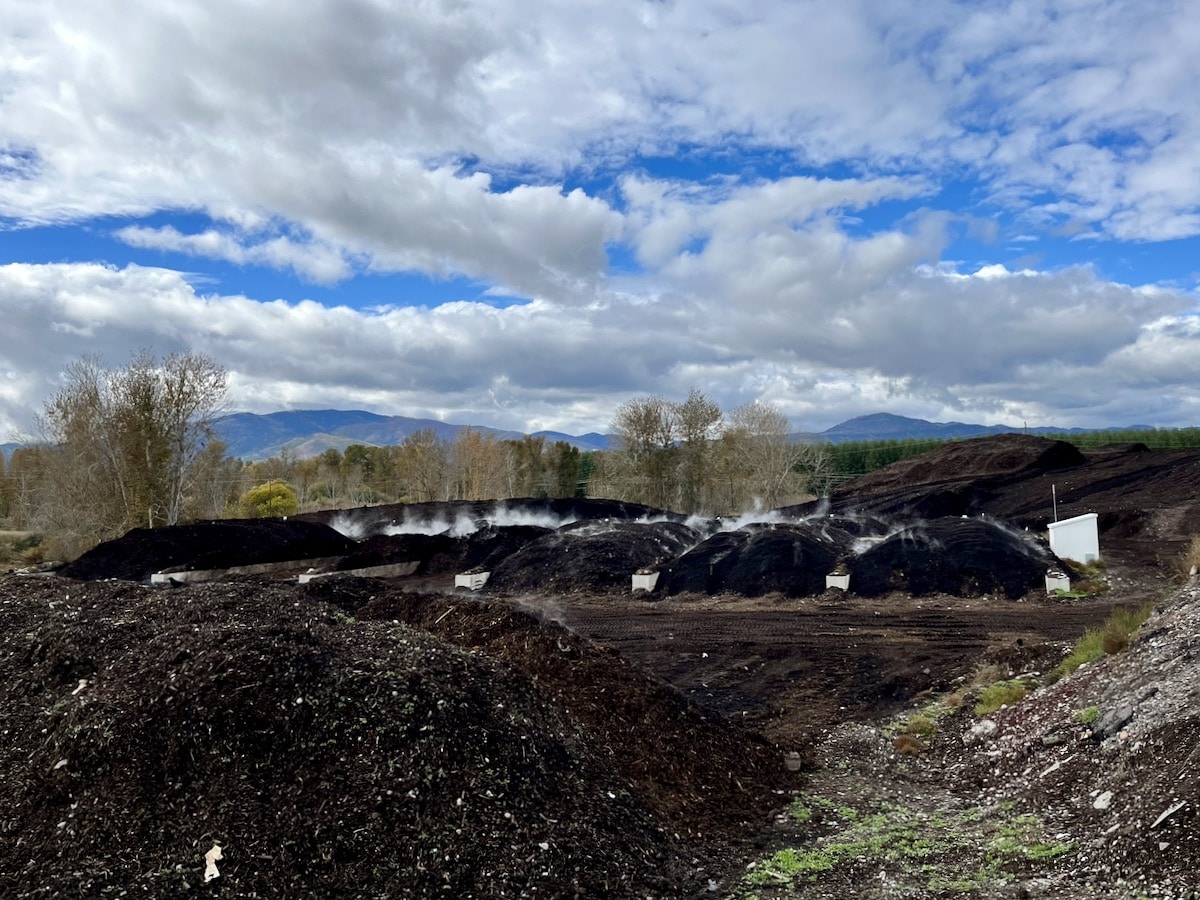
Back at Missoula’s treatment plant, biosolids from the digestor are continuously conveyor-belted next door to the city-owned composting facility called Garden City Compost. Every bit of biosolids the treatment plant receives is mixed with yard waste Missoulians drop off and other plant debris—a three-to-one “green stuff” to “brown stuff” ratio—that, eventually, is broken down into compost and sold to the public, helping to fertilize the Garden City’s gardens.
“That is a lot of organic material,” Gordon said. “We’re basically finding ways to reuse that, to create a usable product.”