In the summers, Sam Veysey Gibbons and Kim Petersen travel east of Missoula to set up skateboarding events along the Hi-line. In recent years, they’ve been specifically touring the towns of Big Sandy, Box Elder, Havre, and Malta (and sometimes Shelby), an area known as the “Golden Triangle.” These small farming towns all have skateparks funded by Montana Pool Service, or MPS, a nonprofit organization founded by Pearl Jam bassist Jeff Ament, who grew up in Big Sandy. The mission of MPS is to “build world-class skateparks” and connect youth in communities around Montana—especially rural areas—through skateboarding and the arts. MPS has funded more than 30 skateparks in rural and Native communities across Montana over the past 10 years. For Ament, it’s personal: He’s said he wouldn’t be where he is today without skateboarding and exposure to music and art as a kid.
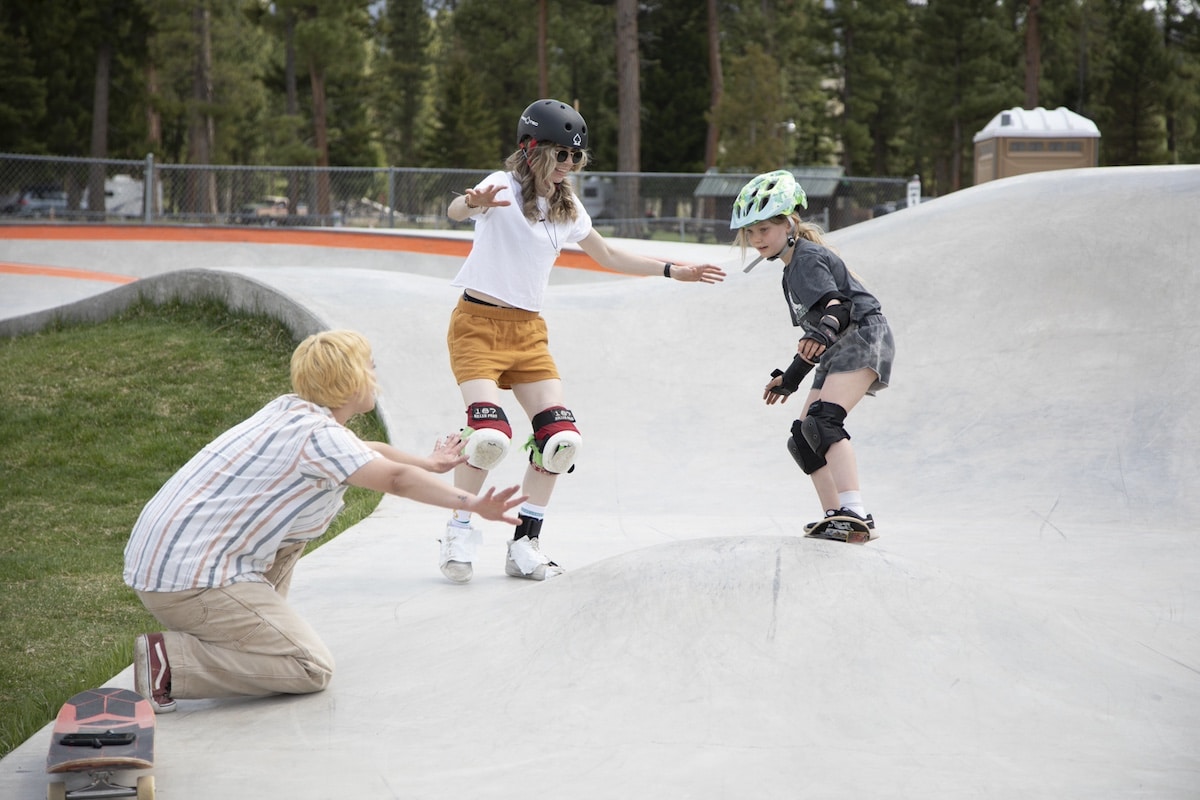
But that Field of Dreams “If you build it, they will come” idea? That’s only partly true. While Ament is deeply engaged in these Golden Triangle communities and helps maintain the skateparks, he can’t do it single-handedly. For towns with little or no skateboard culture, it takes a lot of time and ongoing relationship-building to bring skateparks to life. Girls on Shred, the Missoula-based skateboard/snowboard organization for which Veysey Gibbons and Petersen volunteer, has made it its mission to put in that time and effort—to show up to these skateparks with gear, snacks, water, sunscreen and music, and draw youth (and anyone) together, teaching skateboarding skills, but perhaps more importantly, providing a fun and active space for kids to find friendship, safety, and support.
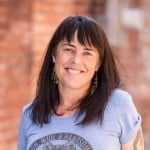
“That area of the state is really important to Jeff,” says Petersen, a Girls on Shred clinic instructor and respected skateboarder (who is sometimes referred to as “The Krusher”). “It’s where he got started and where he realized, if it wasn’t for [music and skating] magazines, and a few other skateboarders in town, and having an uncle that listened to fairly decent music, he wouldn’t be who he is. And so his heart is in rural communities, and especially, there’s an extra soft spot for reservation skate parks.
“He started supporting our tour to the Golden Triangle because that is his special place and he was seeing the impact that we were having on the community. So that’s been a really big help to us to have that tour. We have to have someone invested in that tour, so that we can keep doing it.”

Girls on Shred’s fundamental purpose is to help cultivate diversity in both snowboarding and skateboarding. But its approach has changed over time. The volunteer-run organization started in 2010 as a women’s noncompetitive snowboarding event. It was a way to build camaraderie among female borders in a sport that had been fairly male-dominated. Veysey Gibbons was a part of that crew, and eventually took over the event. A few years into it, she partnered with Petersen, an accomplished skateboarder, to add skateboarding events in the summer. They began putting on Girls on Shred events at Missoula’s skatepark, Mobash, providing informal clinics where women and girls could come and hang out, get pointers, and meet other women and girls.
Skateparks have historically been dominated by cisgender men and boys for all kinds of reasons. In some worst-case scenarios, women and girls have faced actively hostile boys-club attitudes rooted in obvious sexism. But a lot of times, the issue has been more nuanced. Women and girls who broke into the scene often did find acceptance and camaraderie with the boys—it’s just that they were still an anomaly. Girls on Shred is working to change the culture, and they’ve found support over the years with the Montana Skatepark Association and Missoula’s iconic Hip Strip snowboarding/skateboarding shop Board of Missoula. Volunteers—of all genders—that come out to help at Girls on Shred events are often at the skatepark a few times a week, which means they become a friendly face to the newbies.
“That helps build confidence,” says Veysey Gibbons. “I think Missoula is pretty lucky. A lot of the guys at the skatepark are really quite nice. But, you know, it’s still good to have a few buds in your corner, just in case.”
Petersen says the clinics are just as much about building relationships as they are about building skills.
“You’re really trying to bring people together, and help them find their people,” she says. “There’s nothing worse than going to a skatepark alone as a beginner and not knowing what to do. So if you can bring people together and form a bond, even if it’s just for that day, you’re sparking some kind of connection that will hopefully get them there the next time.”
Skateboarding isn’t like a lot of team sports or other forms of recreation. It’s looser, more mercurial, and has always been about innovation and improv. Petersen and Veysey Gibbons conduct the events in that spirit. They bounce around from person to person, giving pointers, encouraging them, or working with them on certain skills. They also teach skatepark etiquette. The rules aren’t hard and fast, so sometimes it’s about teaching new skateboarders simply to be alert in a space that can sometimes feel lawless and chaotic.
“There is no rhyme, there is no order,” Petersen says. “You go when you want to go, but you’re respectful. You watch out for other people. If you want to get in the bowl and have it to yourself, or with a group of people, that’s fine. But don’t stay too long! You can learn how to drop in without snaking other people. But the basics are: Share the park with everyone. Watch where you’re going. Keep 100 percent attention on what you’re doing. Don’t get tunnel vision. Because you are not alone, and anything can happen at any time. This is dangerous. This is not a playground—it is but it isn’t. So it’s about: ‘How do you stay safe as a beginner in a skatepark?’ You’re paying attention and understanding what’s happening, so you can be in the flow instead of working against.”
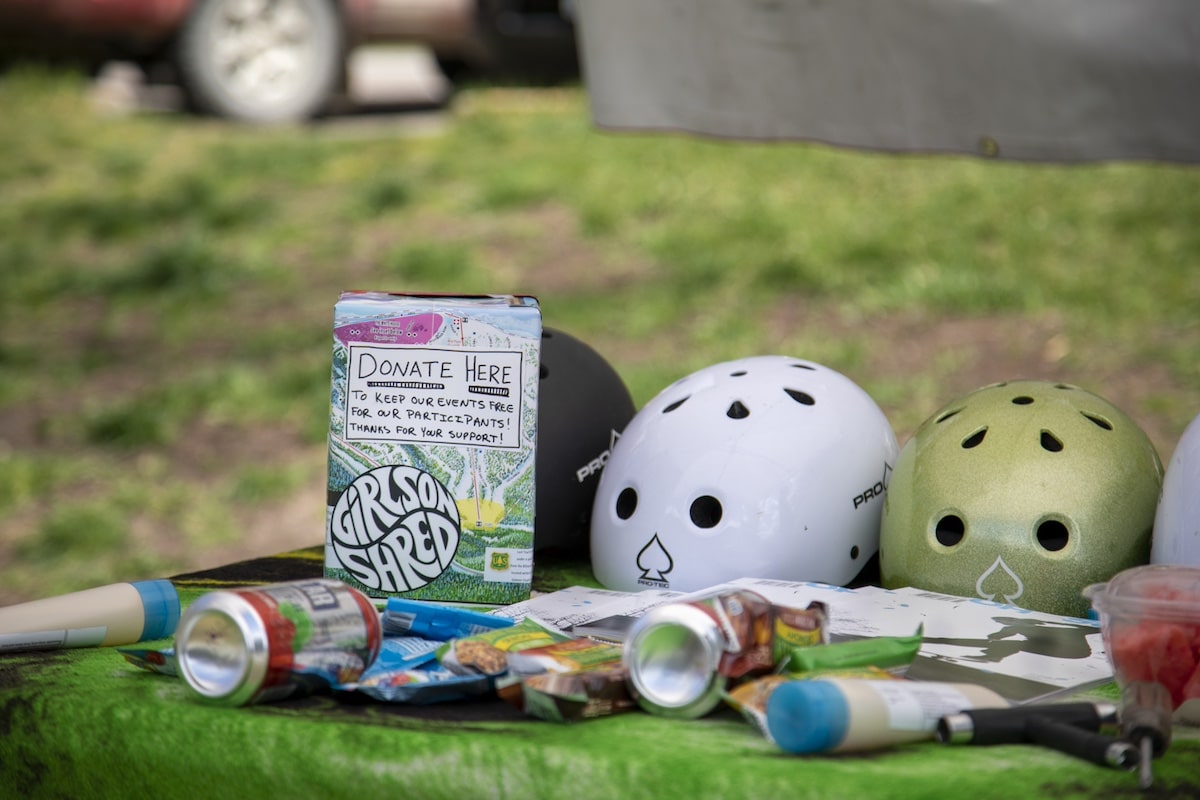
The independent, experimental spirit of skateparks is part of what makes them intimidating for beginners. It’s also what makes skateboarding enticing. Girls on Shred teaches beginners to be confident in themselves, so they can thrive in that environment.
“We’re not trying to be super stiff,” Veysey Gibbons says about the clinics. “It’s not a structured zone. Kim and I both grew up in a male-dominated zone—me and snowboarding and her and skateboarding. It wasn’t structured, and it’s never really going to be. It’s a free-for-all. So it’s good to find your voice—to speak up for yourself, and find your crowd.”
Girls on Shred events are also a way to condition frequent users of the skatepark to the idea that it’s a shared space, without creating animosity.
“We really try and emphasize to the folks when we roll up to skate parks that they’re open places for anybody to go to,” Veysey Gibbons says. “We’re not trying to stop people from using the park when we’re there. We’re really trying to create a symbiotic relationship between our programming and the people that are naturally just coming. Usually the guys are really respectful, but every once in a while it’s a bit tricky.”
Veysey Gibbons says that Girls on Shred originally focused on girls and women, but after realizing that her transgender and nonbinary friends were dealing with the same barriers to entry, the organization has made sure to shift its focus to broadly support marginalized genders. Especially in Missoula, where the skateboarding community is bigger and has a longer history, that shift makes sense. It’s still “Girls on Shred” leading it, but the message encompasses lots of identities.
“Language changes all the time,” Veysey Gibbons says. “And we’re here for that. It is so important for organizations that are similar to ours to keep their ears open and hear what people are saying and make it stay inclusive. We’re not trying to polarize people at all with our name. The name is just a brand now. But it’s about getting together with your people. It’s a vibe.”
In rural Montana, the Girls on Shred goals shift a little. When Veysey Gibbons and Petersen started traveling to rural areas, they saw that the need for community support looked much different. Missoula has skateboarding resources and a skateboarding scene. Kids can ride the bus to the skatepark. At the Golden Triangle skateparks, where skateboarding is new, they saw that boys really needed support and encouragement, too. And when Girls on Shred shows up at new skateparks in small towns, not only are they often the first girl skateboarders the locals have met, they might be the first skateboarders they’ve met, period.
“The impact of being a group of non-traditional skateboarders coming into a town and setting up this clinic is doubled,” Petersen says. “These kids are not only seeing skateboarding for the first time, but they’re seeing non-traditional skateboarders doing all the work.”

After their clinics, Girls on Shred stays in touch with interested skateboarding youth in these towns, often sending them care packages with equipment and gear—hoodies, hats, boards, you name it—during the off seasons.
“It’s quiet out there in these rural towns, but there’s little tiny local scenes that are getting bigger and bigger and bigger,” Petersen says.
The goals of Girls on Shred are not just to support these skateboarders in their hometown skateparks, but give them opportunities to see and be a part of the larger world of skateboarding. In 2022, Petersen was able to take a Girls on Shred participant to compete in the Exposure skate event in Encinitas, California, where a couple hundred girls, women, nonbinary and trans skaters from across the world come to skate for a $60,000 prize purse. (Petersen also competed and placed third in her category).
Last year, thanks to an Ament-backed scholarship, Petersen took eight rural kids to Woodward West, a world-renowned skateboarding camp in Tehachapi, California. Three of those kids were girls.
“I was able to make connections there,” Petersen says. “They said, ‘We want to see more girls at our camp and so we would like to sponsor Girls on Shred to come to camp in the future.’”
Petersen says that even in just the last couple of years, the pool of non-traditional skateboarders has expanded and become more skilled, so that Exposure and other events are even more competitive. That’s one of the reasons Woodward West is a great place for future competitors to sharpen their skills. This summer, the camp is funding three Girls on Shred spots, and Petersen and Veysey Gibbons want to raise money to fund even more kids, including youth from rural and Native communities.
One place Girls on Shred has established a special bond is on the Rocky Boy Reservation. There is a small group of teens there who have become best friends through the skatepark. “They count the days until we come,” Petersen says. “They look forward to every visit.”
Petersen says the impact of the Girls on Shred program for the Rocky Boy kids is evident and powerful—including for her personally
“It has been just life-changing for me to understand what skateboarding has meant to them in their community, that without the skatepark or without skateboarding and each other…,” Petersen says, trailing off.
“Life is hard in these rural communities. And skateboarding is an open door to feeling and positivity and for personal growth. I mean, I can see it happening in their lives, from year to year. And they have to get through the entire winter until they can skate again, so it is not easy. But, yeah, we’ve got a cool little crew there.”
Veysey Gibbons also says the work comes with profound rewards. Over the past four years, Girls on Shred has been working with Soft Landing, a community-based nonprofit that supports refugee and immigrant families as they build new lives in Missoula. She recalls spending a day with one group of refugee girls at Snowbowl where they tried snowboarding for the first time. The bunny hill is often deemed too boring by kids their age, but for them it was all new: being in the snow and connecting with nature, laughing with each other. It gave the girls the opportunity to just have fun, Veysey Gibbons says, which was a contrast to their past experiences of worrying about how to survive in a war-torn country.
“It is so fun hearing all their friendly competitive banter and they don’t have to worry about anything there,” she says. “They come up to the hill, we provide all the gear that they need, get them lunch, get them hot cocoa. We’re able to do one-on-one lessons. And it has been really heartwarming, not only for me, but for other volunteers. It has changed me.”
Girls On Shred is the only group in Montana doing this kind of work, and as more skateparks are built, its volunteers see an opportunity for the nonprofit’s footprint to grow. Its Missoula Gives fundraising campaign (donations are accepted until May 11) is partly about helping to get more kids to Woodward West, and to continue to support skateboarding and snowboarding programming for youth across the state.
Because, of course, if you ask Petersen and Veysey Gibbons, it’s about more than just getting on a board and learning to ride.
“I always say, if you’re interested in skateboarding, give it a try—and you just might find your power,” Petersen says. “And aside from that, you know, there are so many directions you can go as a kid, especially in rural communities. Oftentimes it can be down a path of substance abuse or other things. And so, why skateboarding? Because we want kids to find their power and to find their happiness. It’s not just that skateboarding is cool and it’s fun—and it is. But it’s a way to persevere. It’s a way to challenge yourself and overcome. It’s a way to grow as a person.”
“And a way to find a community,” Veysey Gibbons adds. “To find other people to make your life better. We have so many folks who say they met their partner, they met their best friend, they have found their chosen family through our events. A few folks will get bonded over a silly little piece of wood with wheels on it, playing on concrete—and that’s beautiful.”