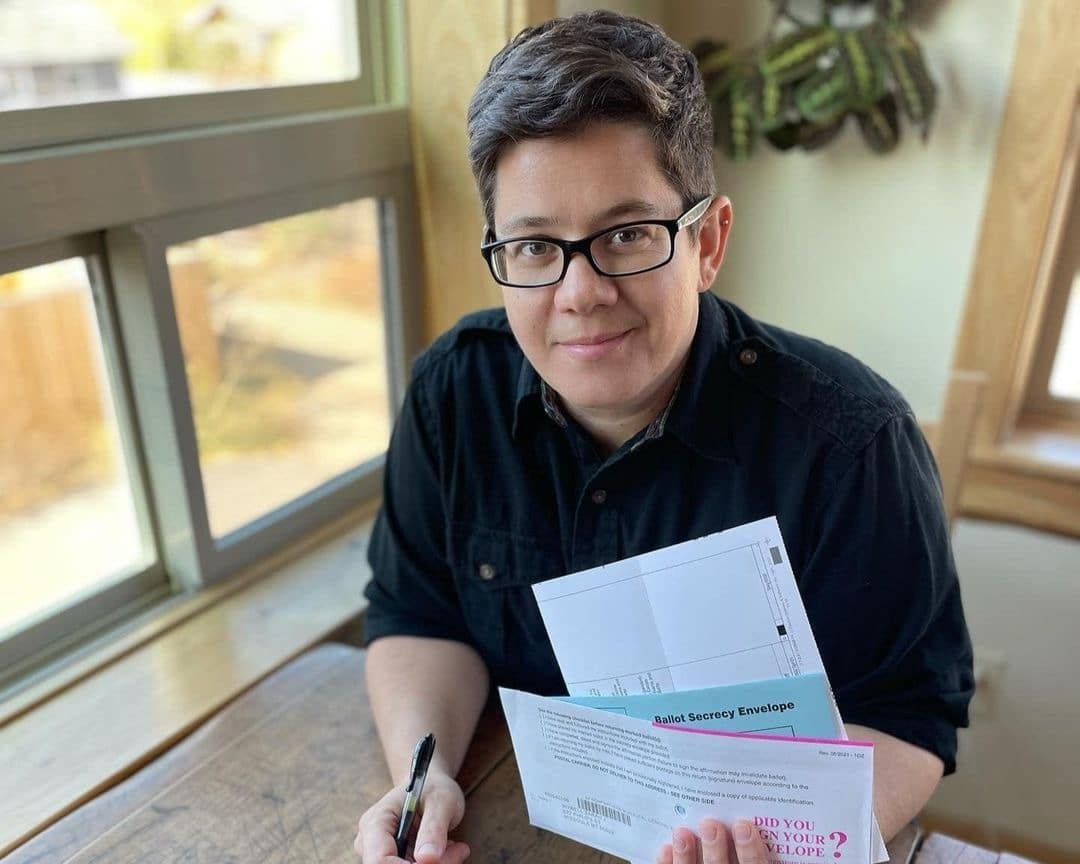
Back in February, the Democratic lawmaker and executive director of the non-profit Montana Women Vote SJ Howell announced their bid for a second term in the state House.
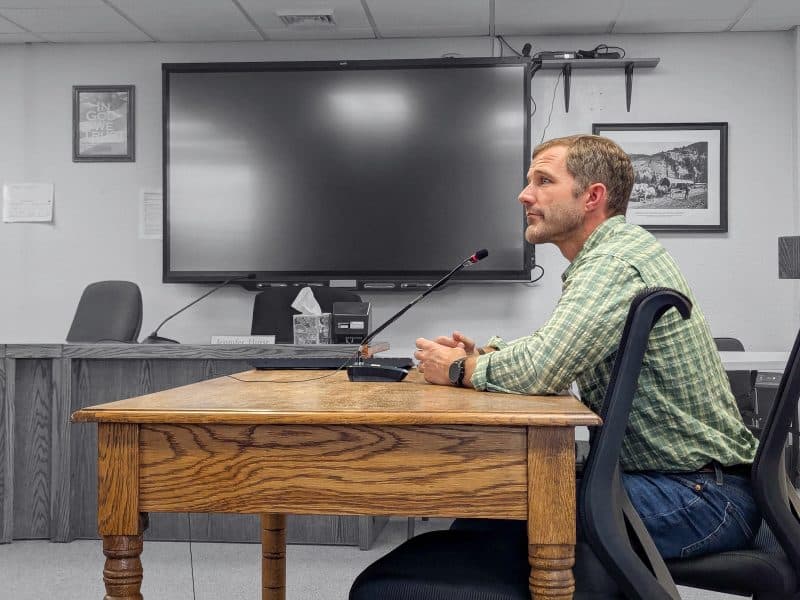
After fending off a primary challenge earlier this month, Howell, 43, will face Republican Paul Buckles in November’s election. (Last session, Howell represented HD 95. The district’s boundaries changed slightly in last year’s redistricting process, but the district, now HD 100, still covers downtown Missoula and the Northside.)
Read on as Howell brings their detail-oriented approach to bear on a range of issues facing Missoula and Montana writ large—from the city’s proposed urban camping ordinance to the continuation of Medicaid expansion—and reflects on lessons learned from the tumultuous 2023 Legislature.
This conversation has been lightly edited for length and clarity.
The Pulp: Before we talk politics, what’s your go-to date night spot in Missoula?
Rep. SJ Howell: I’ve been a “Beeper” fan [Brasserie Porte Rouge] from the start. I love to grab a seat at the bar. I also love to go to the river, walk around and get some ice cream. It depends on what kind of mood you’re going for.
And how much money you want to spend.
It really depends how deep into the month we’re talking [laughs].
Switching gears: What’s been your experience engaging with the proposed urban camping ordinance in Missoula?
I want to preface this by saying that I think this isn’t an issue where there’s one clear solution. That being said, since last fall when the city first started talking about regulatory ordinances for people who are living outside, we have been very clear that a regulatory approach alone is not just ineffective, but actually really harmful to people, people who are experiencing very difficult and inhumane circumstances.
I was pleased that the city hit pause on the last ordinance last winter. I was pleased that Mayor Andrea Davis pulled together a working group. And I’m really disappointed that after six months of this, we are, in my opinion, back where we started with an approach that is almost entirely regulatory with no services, no clear direction to folks on where they can be, and no ongoing acknowledgement from the city that there are not enough shelter beds or enough shelter options for everyone who needs them.
I also am really concerned that we’re gonna see some negative effects as people are pushed to the margins of the city, pushed away from service providers and pushed into isolation.
When you say “we,” who are you referring to?
There’s actually a lot of folks organizing on this issue in the city. When I say “we,” I mostly mean my colleagues at my day job at Montana Women Vote. There’s this great group called the Unhoused Neighbors Union, which is a group of folks experiencing houselessness who are organizing themselves. There’s a number of other advocates and service providers; we sort of stomp around together.
There’s a fair amount of housing going up in and near HD 100 right now. Are these projects the result of the housing policy bills passed last session, or were they already in the works?
The Villagio Apartments and Blue Heron predate session bills. I think the bills that we passed last session are a drop in the bucket in terms of what we need. I think we are seeing some impact, but it’s not enough. The money isn’t getting out the door quickly enough.
There’s a number of areas of housing policy that the Legislature really didn’t touch: first and foremost, anything that benefits or protects renters. We had an emergency rental assistance program during the pandemic—basic protection where folks who are a few hundred dollars away from eviction can stay in stable housing. That is one of the most effective ways we could spend state dollars in terms of housing. We’re not doing that.
Our voucher programs are woefully underfunded. Partially, that’s a federal problem. But the state has the ability to both adjust the voucher rates to better define affordability, or to put state money in on top. We’re not doing that.
With regard to houselessness, to emergency housing and shelters, we appropriated $5 million out of a $2 billion surplus, not to mention our standard budget. I think that amount of money is offensively small.
Can you help readers make sense of the complications around Medicaid right now?
There’s two major conversations happening around Medicaid right now. One [involves] continuing Medicaid expansion. Montana expanded Medicaid in 2015. It has been a hugely successful program. We took legislative action again in 2019, [and the bill includes] a sunset in 2025; without legislative action, Montana’s Medicaid expansion program will end. So it’s a top priority for me and for a number of legislators on both sides of the aisle to continue that program in 2025.
It’s crucial to the 90,000 Montanans who need it. It’s crucial to our healthcare infrastructure, which is pretty battered. Medicaid expansion has been a huge economic boon, both for small businesses and the state’s economy across the board.
The other piece of the Medicaid conversation is management of the program. When the public health emergency ended last year, everyone on Medicaid in Montana, which is about 350,000 people, had to have their eligibility redetermined.
That process went very badly. A lot of kids lost health coverage. A lot of people lost coverage for procedural reasons—they didn’t get their paperwork, they missed their deadline, they couldn’t get a hold of somebody. At one point we had one of the longest reported wait times on our public assistance helpline in the country. There’s a cascading effect when so many people lost coverage so quickly, many of whom were still eligible. People couldn’t get the care they needed. People got care and couldn’t pay for it.
Providers weren’t getting their bills paid and saw a big increase in uninsured patients. A year down the road, we’re seeing layoffs at RiverStone in Billings, layoffs at Bozeman Deaconess, small providers closing their doors. A lot of the gains that we’ve made with substance use disorder treatment centers are being eroded as providers just can’t stay in business. One-third of Montanans are covered by Medicaid. I’m deeply frustrated at the lack of accountability that people are facing in the management of Medicaid.
How do you go about changing that accountability?
Unfortunately, the accountability mechanism is the governor being responsible for his appointed agency heads. When we don’t see those policy opportunities being taken seriously by the governor’s administration, I do think it’s our job as a legislature to think about passing policy ourselves.
What do you make of Republican lawmakers like Sen. Trebas who have vowed to “nuke” Medicaid expansion?
There is real division in the Republican caucus on Medicaid expansion, and I think that division does not reflect the popularity of Medicaid among voters across the state.
There are some legislators whose commitment to their constituents in their district will overcome party ideology on this. I think it will be like it was in 2015 and 2019—a big fight to get all the way through to the end of this process. But one of the reasons I run for office is because this work is so important and we need serious people. I would characterize some of the other approaches as deeply unserious. I think it’s gonna be one of the big divisive issues of the session.
If reelected, what’s a lesson or experience from last session that would inform your approach coming back to the Gladiator Dome in Helena?
There are two lessons I took away from last session. The first is that details matter. We passed some policies last session that sounded good on paper. The housing bill is a great example. But making sure that this isn’t just more bureaucracy, or all talk and no impact. … We have a lot of work to do to get Montana back to a place where people can live and work and raise their kids. Folks are under a lot of economic pressure right now and wondering if Montana can work for them. I believe that we can start to turn the page on that at the Legislature, but we’ve gotta do it with smart policy that’s gonna make a difference in people’s lives.
The other lesson is that we’ve got to keep our eye on the ball. Last session we saw a lot of national ideological nonsense culture-war attacks, the kinds of policies that aren’t gonna make a difference in terms of whether or not Montana works for them and their family.
If we’re gonna deliver for the people of Montana, we have to stay laser-focused on the job that we went up there to do. And it’s not to kick a political football every day—it’s to invest in communities and pass good policy.
A Q&A with Howell’s opponent in HD 100, Republican Paul Buckles, can be found here.