When avalanche forecasters dig snow pits to examine the snowpack’s layers, they typically shovel down at least 150 centimeters. But on a recent Saturday in the backcountry near Lolo Pass, Payton Schiff, who works for the West Central Montana Avalanche Foundation, could only reach a depth of roughly 127 cm before her shovel hit dirt.
As Schiff was assessing the stability of the layers, one of the several skiers passing by on the skin track just below the four-foot hole paused and asked, “How’s the pit look?”
“It’s white,” Schiff replied.
She was only deflecting, but it’s also about the best anyone could say of this winter’s paltry snowpack, even there along the Montana-Idaho border, one of the region’s more reliably snowy spots.
“People keep apologizing to me about this winter,” said Schiff, who moved to Missoula in October. “And I’m like, I get it—this isn’t normal.”
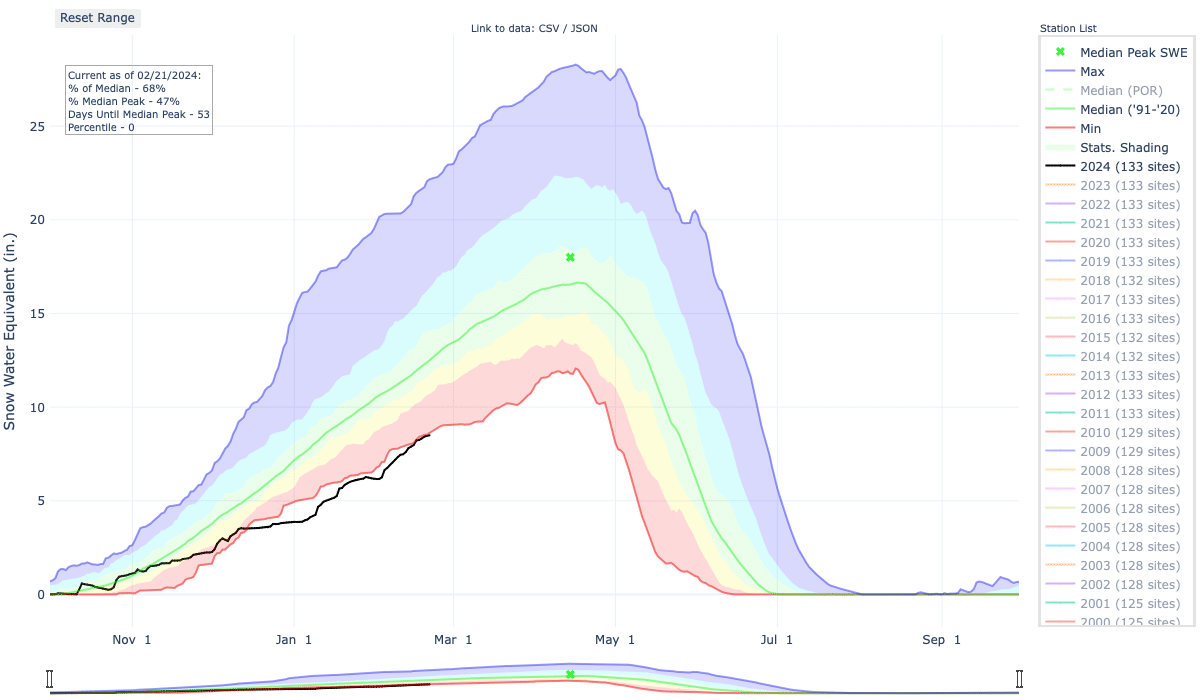
Across Montana, the amount of water contained in the snowpack—a measure known as snow water equivalent—to date is the lowest since record-keeping began in 1979, according to Natural Resource Conservation Service data. In the Upper Clark Fork, Lower Clark Fork and Bitterroot basins surrounding Missoula, the snow water equivalents stood at 56 percent, 59 percent and 66 percent of the 30-year median, respectively, as of Feb. 16.

Montana State Climatologist Kelsey Jensco said there’s little hope for a meaningful rebound.
“At this point, it will be almost impossible for snowpack to reach normal levels,” Jensco said. “There are a lot of hallway conversations being had about hopes for the next big storm to bolster our snowpack to normal conditions. The reality is that even if we had above normal snowfall from now until April, we would still be in a deficit.”
It’s a harsh reality for the West Central Montana Avalanche Foundation. Some of its revenue comes from teaching avalanche safety courses. But the lack of snow has led to fewer course registrants, forcing the nonprofit to cancel most of its programs. With the low snow, Schiff said people just lose interest in skiing—and WCMAF loses necessary revenue.
“Things are stretched pretty thin right now,” she said.
In a state that ranks No. 3 in the country for the proportion of its economy linked to outdoor recreation, the dismal snowfall leaves a range of snow-dependent businesses and their employees high and dry—to say nothing of snowmelt-dependent businesses.
Over the last few weeks, at least two western Montana ski areas have been forced to close. Teton Pass Ski Area near Choteau announced on Feb. 8 it was done for the season due to an “insurmountable” lack of snow. It operated just four days this winter.
“The financial hole we have dug is large, and we don’t think we could operate our way out of it even if the snow showed up,” Teton Pass owner Charles Hlavac wrote in a letter posted to Instagram. “The correct decision from a truly non-emotional business perspective is to ‘cut off the limb to save the life,’ or in other words end this season now, so we can ensure more seasons in the future.”
About a week earlier, Turner Mountain near Libby announced it was closing temporarily and has yet to re-open, leaving its half-dozen employees out of a job. Dakota Bassett, who has worked there for the last seven years, is one of them.
“It’s just been kind of one of those tough years for the mountain,” Bassett said. “It could turn around, or it could not. We’re hoping for the best.”
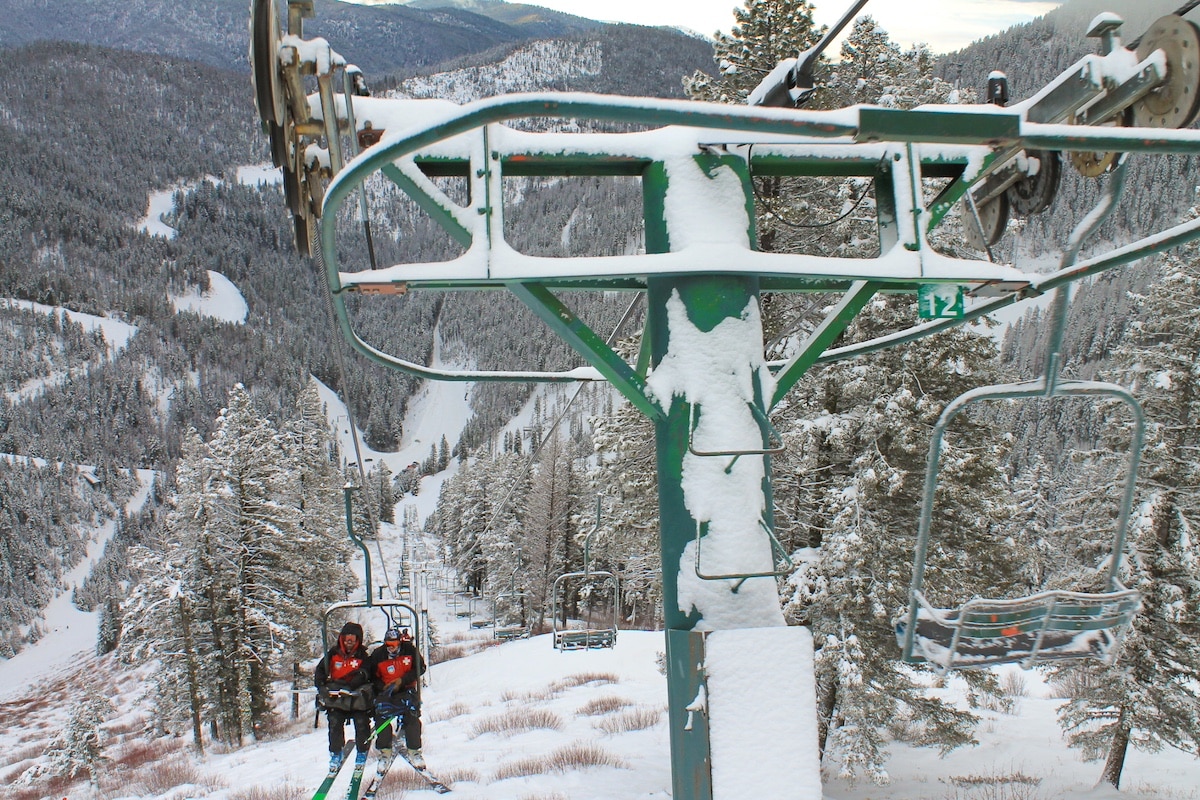
Montana Snowbowl outside Missoula has managed to stay open despite its meager base, but it’s been a rocky season. Cole Oie moved to Missoula in November and got a job on Snowbowl’s snowmaking team, but for much of the winter, he said, temperatures have been too warm to make snow. He was able to join the maintenance crew for a few shifts, but it didn’t last.
“I kept showing up, but there was nothing to do,” Oie said. “There hasn’t been enough work to pay the bills.”
The disappointing winter has him hesitant to seek seasonal work in the ski industry again.
“It does worry me a little bit,” Oie said. “I’ll think about this winter and maybe not want to get another job like this again. I definitely don’t think I’ll work at Snowbowl next year.”
Other positions at Snowbowl have been slightly less fickle. Steven Quade is a full-time liftie at Snowbowl, in his tenth winter working at the mountain. As much as he loves the Snowbowl community and is invested in keeping the small “mom-and-pop hill” running, Quade said it’s a season to forget this winter has been tough.
“It’s been brutal, totally brutal, really depressing,” he said. “But, you know, smiles on faces—we just pretend we’re happy.”
Quade, who spends his summers working as raft guide, is among the many Montanans across a range of industries—from outdoor recreation to agriculture and wildland firefighting—growing increasingly concerned about the snow drought’s literal trickle-down effects.
“I just follow the snow down the mountain and into the river,” he said. “I see both sides of it when the climate shifts like this. So hopefully we get late-season snowpack, or rainwater.”
Fellow raft guide Tyler Bisson, who works in the Snowbowl ski shop, is in the same boat.
“The snowpack in the whole state is ultimately going to impact the rivers,” Bisson said. “The more concerning thing … is fire season. It’s going to be bad.”
Just as winter snowpack drives the outdoor recreation economy year-round, it drives business at the Trail Head, the outdoor retail fixture in downtown Missoula. Megan Frank, a manager at the store, said business tends to dip in February, March and April, but it’s shaping up to be an especially slow stretch this year. In fact, Frank said the Trail Head stopped accepting donations to their winter consignment section because people haven’t been buying winter gear.
“That’s a little unusual for us at this time of year,” Frank said. “Especially in Missoula, folks are really reactionary to what’s happening in town. If there’s no snow in town, people think, ‘Oh I can’t go skiing.’ Specifically in retail, people are so reactionary to the weather. If it’s raining, people will buy rain jackets. If it’s snowing, people will rent skis.”
Don Gisselbeck has worked as a ski mechanic at the Trail Head since 2005—approaching “emeritus mechanic status,” as he put it. He echoed Frank’s observation, saying, “One of the things that continues to amaze me is if there’s no snow on the ground in town, people don’t think about skiing.”

The same cannot be said for Gisselbeck, who has maintained an impressive streak of skiing every month of every year since October 2005. But this year will certainly test his ability to find skiable snow in Montana through the summer and fall.
“I think it’ll go pretty fast,” Gisselbeck said of the already paltry snowpack, “I was surprised how fast it went last year.”
Not everyone is lamenting the lack of snow, however. Brian Hensel leads Missoula’s streets maintenance division. After the city recorded 111 consecutive days with at least one inch of snow on the ground last winter—the third-longest streak on record—his 33-person maintenance crew has been able to catch up on a range of things this winter, including street sweeping and replacing street signs.
“It’s been great,” Hansel said. “We’ve been able to get some of those maintenance items off our plate.”