This story appears in the first edition of The Pulp’s new quarterly paper, which you can find for free at businesses all around Missoula. Learn more about the paper here.
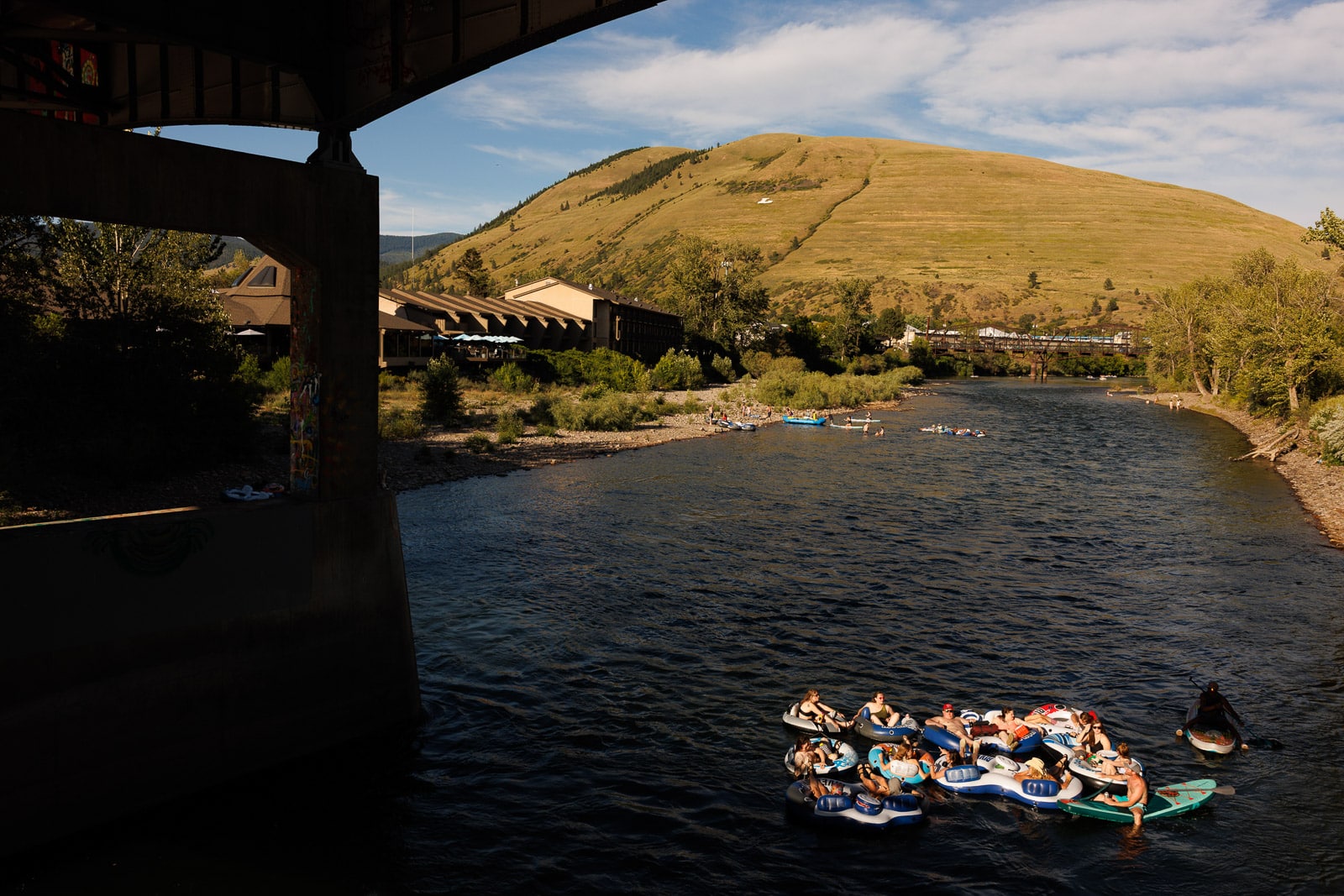
By now, the bright pink tubes of the Clark Fork Yacht Club have become synonymous with Missoula summer. They drift through town like clutches of river-borne mergansers, bobbing out the mouth of the Hellgate Canyon and on toward Caras Park, a sandwich lunch, perhaps a stiff late-afternoon pour. The bravest keep floating right over Brennan’s Wave, and it’s a coin flip whether spectators on the Beartracks Bridge above are cheering for them or the whitewater.
Yet for all the whimsy their vibrant flotillas bring to the summer scene around this valley, co-founders Aimee McQuilkin and Miranda Hickox actually launched the yacht club back in 2022 to help solve a problem. Floaters were flocking to nearby river access sites in increasingly greater numbers, raising a host of safety concerns from parking congestion and trash accumulation to theft and drunk driving. Locals and out-of-town visitors alike often struggled with the logistics of an evening or weekend excursion: schlepping tubes to put-ins, accurately estimating float times, ensuring a sober ride was ready at the take-out.
“Our tagline is, ‘Have the best day of your summer but also be safe and respect our waterways,’” Hickox said. “When we give our safety talks, we’re not just like, ‘There’s a rapid, here’s what you’re going to do,’ but also, ‘here’s a bag for your cans.’”
In that way, McQuilkin and Hickox, who previously collaborated to create the Hip Strip’s vintage shopping corner Divine Trash, joined an ever-growing list of Missoula businesses, organizations and agencies working to improve public enjoyment of the Clark Fork while furthering conservation of the waterway. It’s a tricky balance to strike, one that underscores the central and, at times, seemingly conflicting roles the river plays in Missoula’s cultural, recreational and economic identities.
“Years ago, we were floating logs down the rivers to feed our mills. Now we’re floating people down our rivers to feed our business community.”
Matt Potter still remembers the before times, when Missoula largely kept its back to the Clark Fork. Rivers were precisely what brought him to the University of Montana campus in 1986, a fly-rod-toting youth from back East eager to ply the region’s blue-ribbon trout streams. And they’re what anchored him here, as a fishing guide and co-owner of the 29-year-old Kingfisher Fly Shop. For a long time, Potter recalled, floating the Clark Fork just wasn’t a thing. The Milltown Dam still cut the river in half just above town, trapping nearly a century’s worth of toxin-laden sediment from upstream mines behind its concrete span. No one would bother fishing inside the urban corridor, let alone contemplate a prolonged dip in waters teeming with heavy metals.
“Back in the dark ages, it was full of garbage, whether that was mining waste or literal garbage,” Potter said. “Obviously those days have changed.”
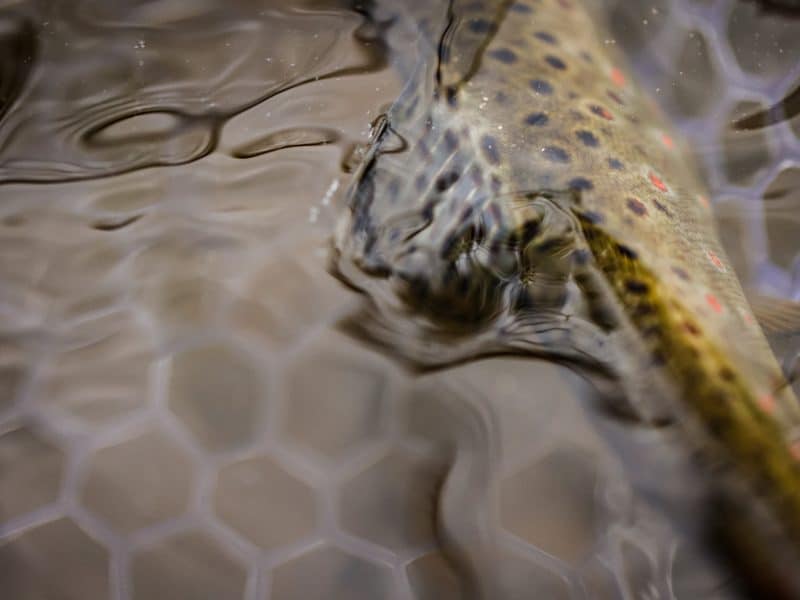
In truth, those dark ages constituted a regrettable middle chapter in the river’s history. Before smelters and the dam and toxic runoff, the Clark Fork had for uninterrupted centuries played a central role in the seasonal flow of life among the Séliš, Ksanka and Ql̓ispé peoples of the Confederated Salish and Kootenai Tribes. They fished it and hunted and slept alongside it. The Hellgate Canyon itself served as a primary gateway east, where they traveled to hunt bison roaming the plains. The Salish even gave the Clark Fork’s confluence with the Blackfoot its first recorded name: Nayccstm, or “place of the big bull trout.”
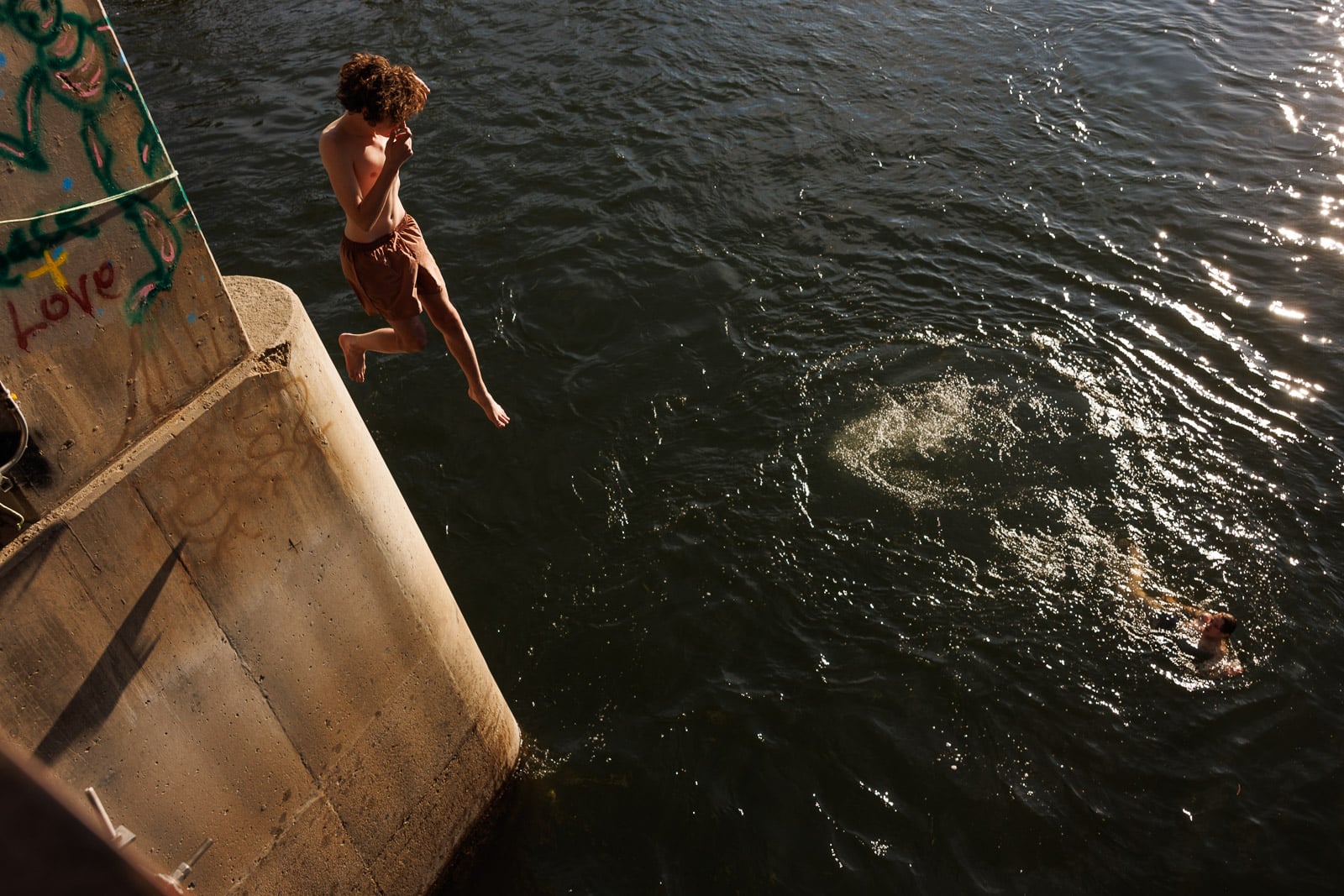
In this way, the latest wave of use on the Clark Fork is less the mark of a rebirth than of a repair — a conscious effort by many, including the river’s oldest known users, to restore what westward expansion and industrialization had marred. A pivotal moment in that movement came in 2008 when crews began the arduous task of pulling down the 100-year-old dam, removing trainloads of toxic reservoir sludge and restoring the Clark Fork’s natural confluence with the equally iconic Blackfoot River. When the work was finally complete in 2012, Salish Pend d’Oreille Culture Committee Director Tony Incashola stood at the site and proclaimed it a monumental moment for the current generation and the many yet to come.
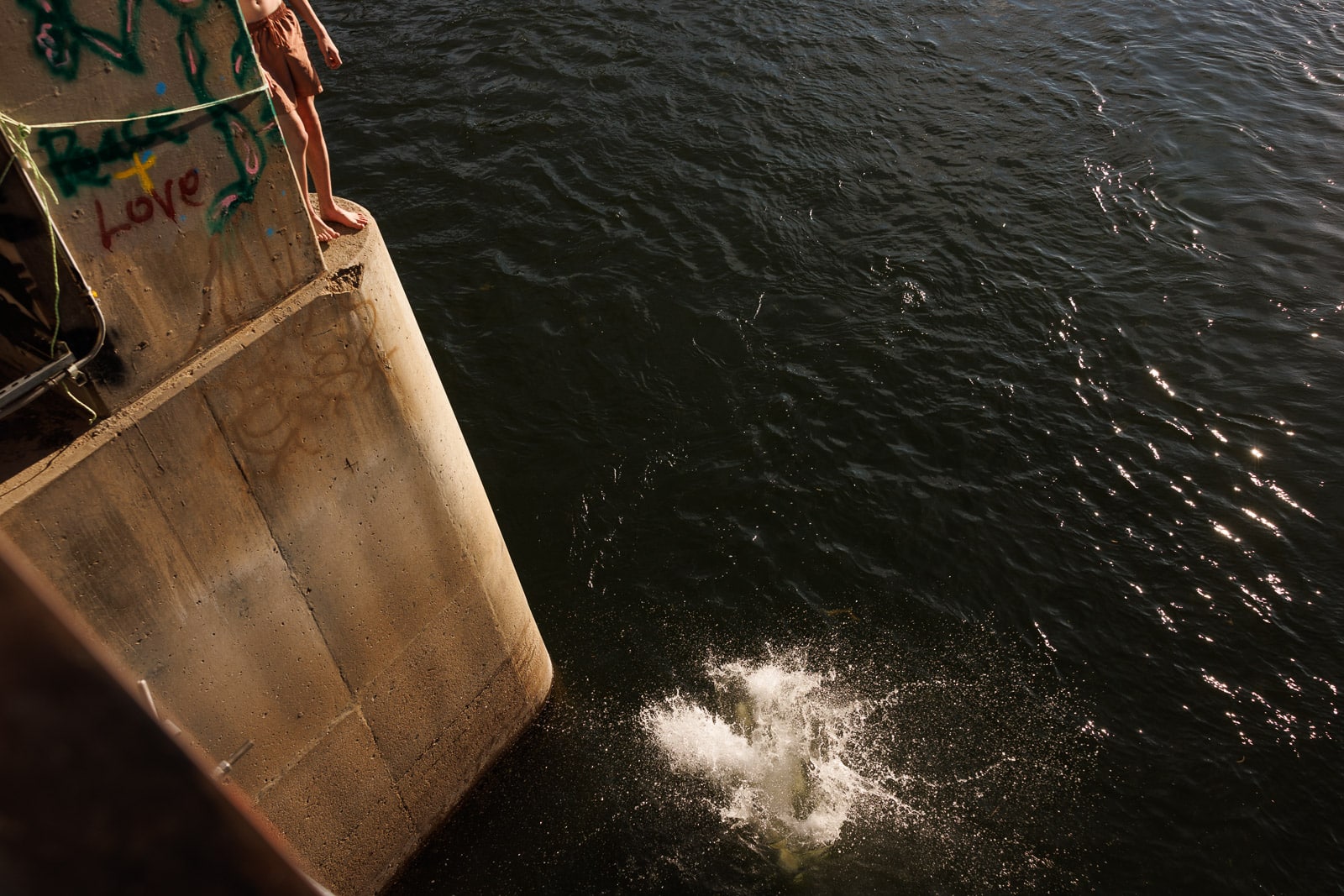
It didn’t take long after the dam’s removal for crowds of casual day-trippers armed with coolers of beer and black tire tubes rented from the downtown Army Navy Store to descend on the stretch above and below East Missoula’s Sha-Ron Fishing Access Site. The mounting popularity of Brennan’s Wave, built in 2006, had already done much to stoke Missoula’s growing aquatic enthusiasm, as did the City of Missoula’s gradual expansion of the riverfront trail system. By summer 2015, local volunteers counted 15,000 users — floaters, kayakers, stand-up paddleboarders — pulling out of the Clark Fork at Caras Park. In 2025, that annual total had surged to 34,000.
“The Clark Fork is really the backbone of our recreation,” said Ben Dickinson, regional recreation manager for Montana Fish, Wildlife and Parks. “And it’s a big part of our local economy.”
Indeed, for business owners like Potter and Hickox, Missoula’s rivers are a literal lifeline. Whether it’s anglers stocking up on stonefly imitations and spools of tippet or residents looking for an easy way to get out-of-town visitors out for a float, waterborne recreation directly supports a slice of the city’s economic sector. But the contribution doesn’t stop there. Chad Bauer, a lifelong local and president of the Missoula Area Chamber of Commerce, often sees hundreds of people float by his riverfront office — people, he noted, whose spending goes well beyond an inflatable tube. They buy beer, groceries, sunscreen, restaurant meals, concert tickets and any other trappings that come with a Missoula summer.
“Years ago, we were floating logs down the rivers to feed our mills,” Bauer said, likening the Clark Fork to “our little gold mine.” “Now we’re floating people down our rivers to feed our business community.”
Even before the latest recreational surge, the Clark Fork Coalition recognized the importance of maintaining and improving the quality of such a central resource. The Hip Strip-based conservation nonprofit played a prominent role in advocating for the removal of the Milltown Dam and the restoration of the waterway. Today the outfit continues to partner with other organizations and agencies on initiatives to mitigate damage, from the annual Clark Fork River Cleanup held each spring to remove trash from the urban corridor to a river ambassador program launched in 2021 as a means of promoting the practical “dos and don’ts” of recreating.
“The river’s our boss and Mother Nature is the senior vice president of our department.”
McKenna Flannigan helms the river ambassador program for the Clark Fork Coalition and describes it as a strictly educational outreach and data collection effort. Seasonal volunteers and paid staffers post up at Milltown State Park or Sha-Ron with mesh garbage bags, free sunscreen and patch kits, ready to answer floaters’ questions about float times or gently remind them that glass on the river is strictly prohibited.
Flannigan views the work as essential to fostering goodwill among the recreating public and to spreading the word about the negative ecological effects of discarded dog poop or user-created trails along the riverbanks. It’s also been a boon for bringing a quantitative edge to the community’s understanding of exactly what’s happening out there on the Clark Fork.
“Last year, in collaboration with the city, we did a massive data collection effort at six different sites in Missoula, counting how many people were floating by, what kind of crafts they were in, parking numbers, beach users,” Flannigan said. “It was a massive effort that provided us a lot of really good insights about the growth patterns of recreation, where folks are going, what time of days that’s peaking — data that’s been super helpful for management and for thinking about infrastructure needs.”
According to Dickinson, that’s precisely where the 2025 user numbers he cited came from. It’s the kind of undertaking that thinly stretched agencies like his would be hard pressed to tackle alone, even with the influx of funding from expanded conservation license regulations, which the state now requires all river users to purchase. Multiple sources emphasized that protecting the Clark Fork has become a communitywide effort, with a host of community, state and tribal stakeholders pooling their resources and expertise. CSKT has played a prominent role in those efforts, working as a formal partner alongside FWP and the U.S. Fish and Wildlife Service to develop the Milltown restoration plan. It took a decades-long court battle and an act of Congress, but as of 2021, the tribes now co-own the Milltown water right too, giving them a legal place at the table in decisions impacting water quality and fisheries.
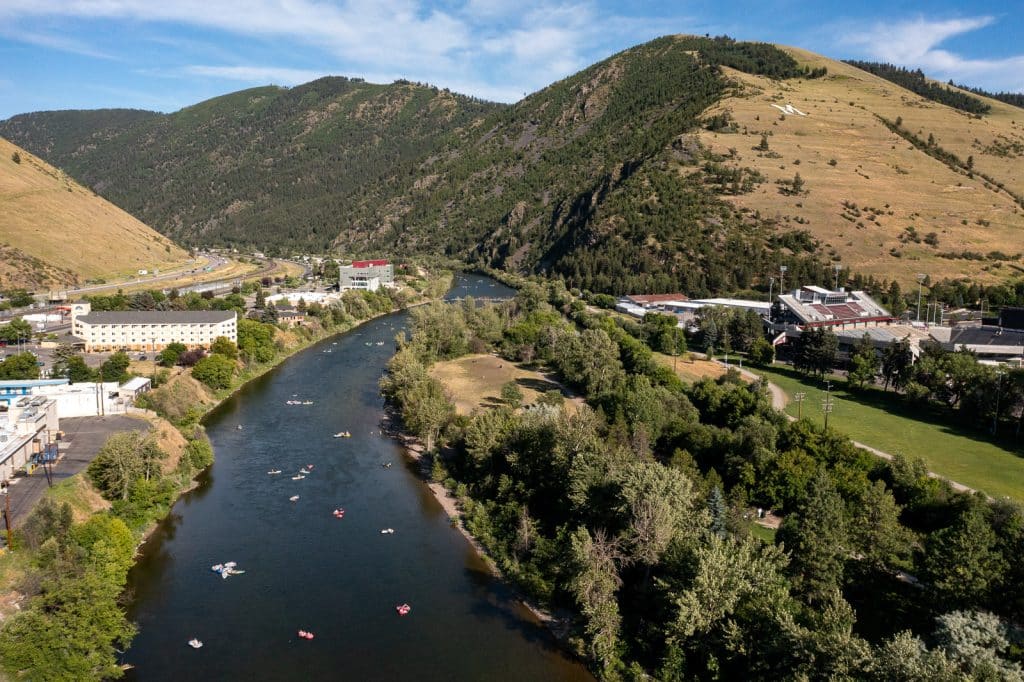
CSKT is pushing for the same kind of cleanup downstream at the shuttered Smurfit-Stone mill site, where the Clark Fork snakes past a series of earthen berms beyond which lies yet another expanse of industrial waste.
As useful as data is to understanding the pressures weighing on Missoula’s watery backbone, traffic totals and watercraft usage details don’t say much about what the river itself might have planned. Flow rates can fluctuate wildly based on snowpack and precipitation, and water temperatures become a growing concern for resource managers as the summer heat peaks. The Clark Fork’s relative unpredictability is particularly salient for those businesses that rely directly on recreation.
Potter said you can watch Kingfisher’s cash flow “ebb and wane” with the condition of the river. August — once a prime window for guided fishing — is now more often than not ruled by fishing restrictions designed to protect heat-stressed trout. About eight years back, Potter added, he and his business partner actually decided to stop offering guided fishing trips in part to help alleviate the growth in river traffic. It’s a form of stewardship built on managing a resource well, but it overlaps with a much older, more holistic view of the river.
“We live at the backbone of the world, where the water begins,” CSKT member Germaine White recently told High Country News in an article about the tribe’s restoration efforts on the Jocko River north of Missoula. “Scientists call it a ‘resource,’ but we call it the source.”
At the Clark Fork Yacht Club, Hickox described a similarly challenging dance with nature. She and McQuilkin have learned not to rely too heavily on late-summer trips, when lower, slower waters can dramatically increase float times. The duo started their fifth season earlier than ever — June 13 — and have shifted the yacht club’s hours in an effort to follow the Clark Fork’s cues.
“The river’s our boss and Mother Nature is the senior vice president of our department, so we will adapt however we need to the weather and climate change,” Hickox said. “We want to be a business that’s working in tune with the river.”