This is one of several transportation stories from the first issue of The Pulp’s new quarterly print edition. Read the rest of the package:
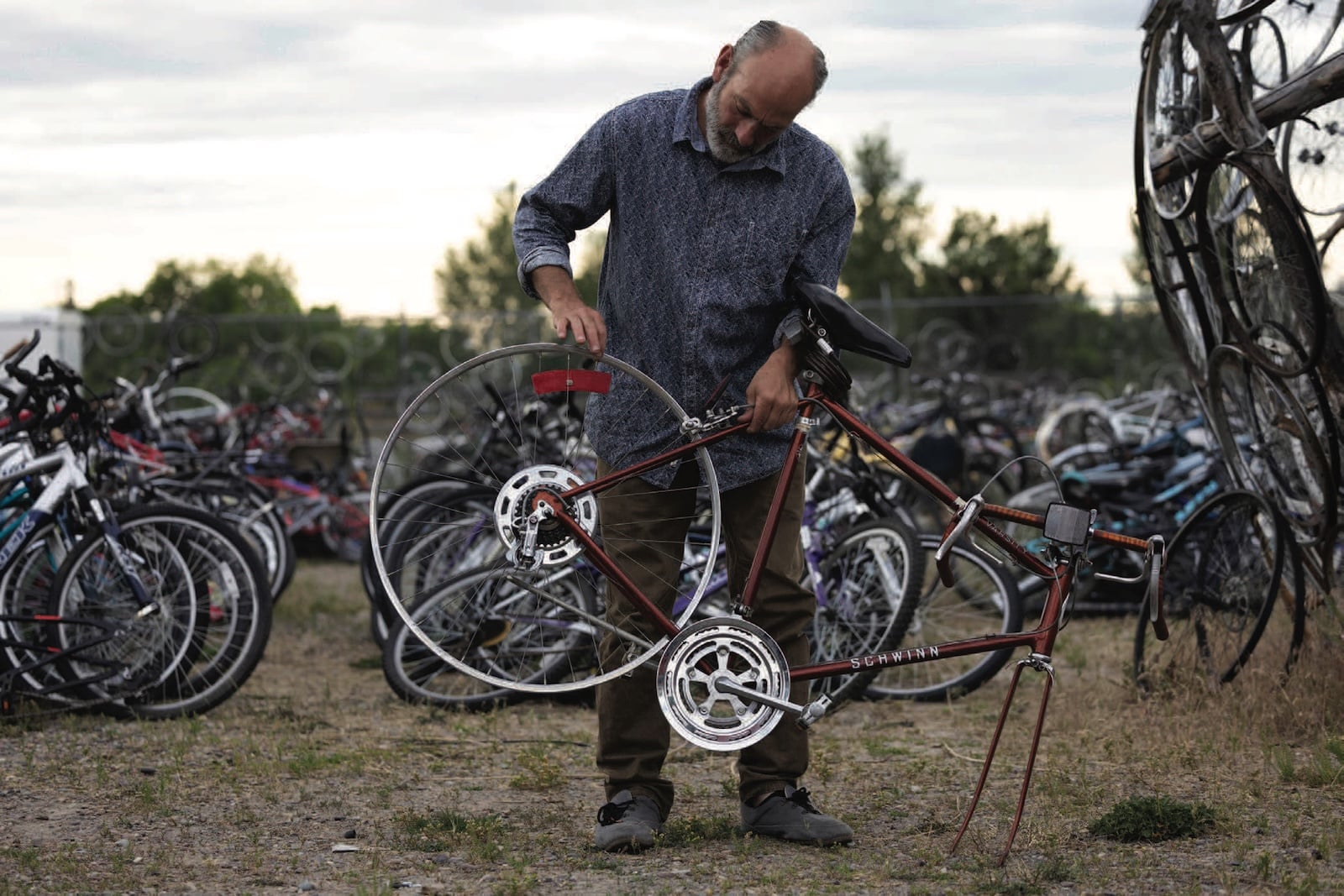
In Missoula, it’s hard to talk about biking or transportation without mentioning Bob Giordano. As the executive director of Free Cycles and the Missoula Institute for Sustainable Transportation (MIST), Giordano has spent years helping shape the city’s cycling and transport culture. Whether he’s helping build bikes at Free Cycles, advocating for safer streets, or pedaling across town himself, he’s become a familiar face to countless Missoulians.
Last year, Free Cycles helped more than 20,000 people build their own bikes, using their model of DIT — Do It Together. If you ask Giordano what’s in store for Free Cycles and Missoula in the next 10 years, the DIT model and community connection are essential.
“When people come in to build their bike, it’s not just about the bikes. We build connections through conversation,” he said. “It’s about engagement and process as much as it is about product. It’s about people and the way we think about our community.”
For Giordano, rethinking the way Missoula moves is key to creating a healthier, safer and more connected city. His vision for the future centers on four ideas: transportation hubs that bring neighbors together, safer roadways with protected bike infrastructure, neighborhood greenways that prioritize people over cars, and mixed-use development where daily necessities are within walking or biking distance.
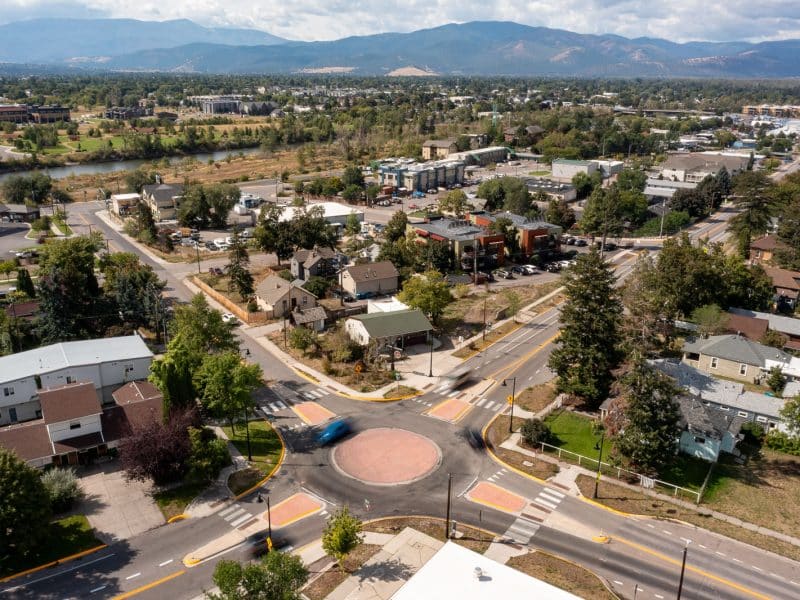
One feature appears repeatedly throughout that vision: roundabouts.
Giordano believes replacing traditional traffic signals with modern single-lane roundabouts would improve safety, reduce congestion and lower emissions while encouraging drivers to be more aware of the people around them.
“Roundabouts force an engagement that doesn’t happen at a stoplight,” he said.
If he had a magic wand, he joked, he would transform all 80 of Missoula’s intersections with traffic light signals, into low-speed roundabouts. Then he’d invest the earnings from the stoplight sales into neighborhood greenways and community conversations about why the change matters. But even then, he says infrastructure alone isn’t enough.
“It’s about engagement and process as much as it is about product. It’s about people and the way we think about our community.”
“If we all woke up tomorrow and it happened, we need context,” he said. “I don’t want to focus just on a physical thing. It’s about engagement and process as much as it is about product.”
That emphasis on community extends beyond transportation. Giordano imagines a future where Free Cycles grows into neighborhood-scale gathering spaces across Missoula. Rather than simply opening additional bike shops, he envisions small community hubs where people can repair bikes, borrow books, share food, attend meetings and connect with neighbors.
“That is really what we’re after with Free Cycles,” he said. “Community gathering space.”
To help make that vision possible, Free Cycles is currently raising funds through its Free Cycles Forever campaign. After purchasing its property in 2016, the organization has spent the last decade paying down its mortgage while expanding programs and serving tens of thousands of community members each year. The campaign aims to eliminate the remaining debt so future donations can go directly toward staff, programming, tools and new neighborhood initiatives instead of mortgage payments.

Giordano is especially excited about expanding opportunities for young people. Currently, he is working to develop a youth program designed to help young people build their own bikes, and then go on group bikepacking trips. The program is designed to help people learn new skills, build confidence, and develop a sense of connection to their community and to how they get around. For him, teaching someone to fix a flat tire is only the beginning; it’s a way of helping people invest in the place they call home.
While infrastructure and city planning are important pieces of the vision Free Cycles and MIST have for Missoula’s future, Giordano believes lasting change starts with the people who live here. Transportation isn’t simply about moving from one place to another — it’s about creating places where people want to stay, connect and participate.
“If you really grow and cultivate a shared vision,” he said, “then the future looks bright.”