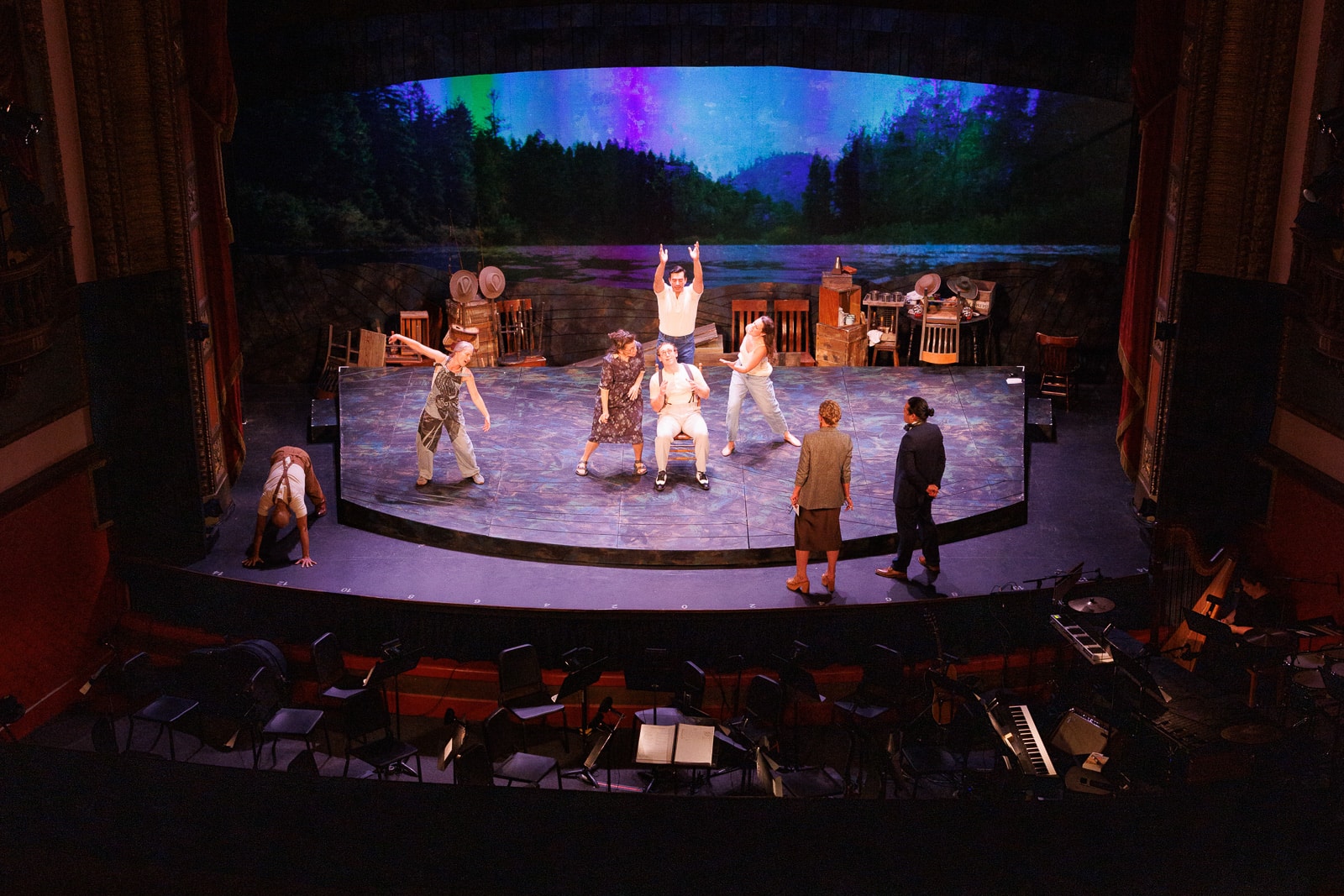
Fifty years ago, Norman Maclean’s widely acclaimed novella “A River Runs Through It” hit bookshelves, captivating readers with a tale of family and fly-fishing set along the banks of the Blackfoot River. To mark the anniversary, Opera Montana is bringing Maclean’s words back to their home waters this weekend — this time, setting them to music.
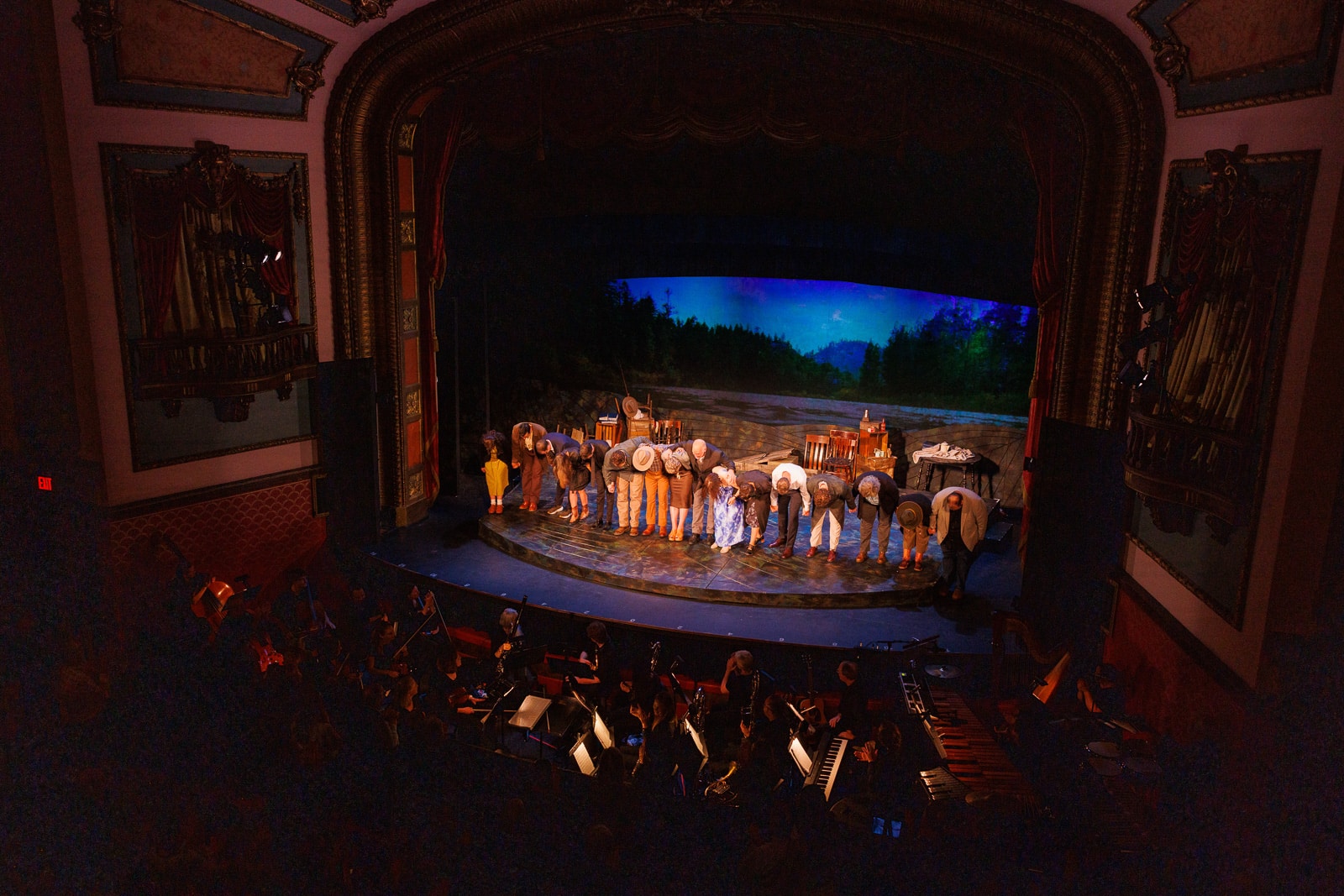
Yes, you read that right. The book, famously adapted for the screen in 1992 by Robert Redford, is now an opera as well, one that Montana’s 40-year-old opera company debuted Sept. 18 to a sold-out crowd at Bozeman’s Ellen Theatre. For those picturing Brad Pitt’s iconic shadowcasting or his harrowing whitewater escapades, “A River Runs Through It” might not leap out as the most obvious source material for a sung stage performance. But stop to ponder the waters a moment and you’ll see the poetry and humanity of Maclean’s story break the surface.
To better understand the allure Maclean’s book held for Opera Montana and the challenges of bringing the Blackfoot to the stage, The Pulp spoke with artistic director Michael Sakir ahead of the company’s back-to-back performances with the Missoula Symphony Orchestra at the Dennison Theatre Oct. 3 and 4. The conversation has been lightly edited for length and flow.
“It’s something as poetic in Maclean’s novel as whether the words came first or the water, which one is deeper in the earth.”
The Pulp: OK, first off, turning “A River Runs Through It” into an opera — where did that idea come from?
Michael Sakir: Norman Maclean’s son, John Maclean, is both a writer and a fly fisherman, but unlike his father, he’s a big opera fan, and he had the idea a few years back of turning “A River Runs Through It” into an opera to celebrate the 50th anniversary. Simultaneously, it just happened that a friend of Opera Montana’s general director Susan Miller — Matt Foss, who is a stage director and a writer — had a real profound love and respect for the book and for the state of Montana. He’d worked for the Forest Service here, worked a lot with Montana Shakespeare in the Parks, and he had in mind to adapt the book for stage. When Susan joined Opera Montana [in 2022], we pitched the idea of turning it into an opera to Matt, and essentially it was the confluence of those two events that made the opera of “A River Runs Through It” inevitable.
I mean, John puts it beautifully. He says that his father’s words are one step away from poetry, that the book reads like poetry. And the words of opera are poetry — they are lyric verse. You could practically set to music a page of Norman Maclean’s novella.
That’s high praise for a writer. I imagine composing the music to do those words justice was a challenge.
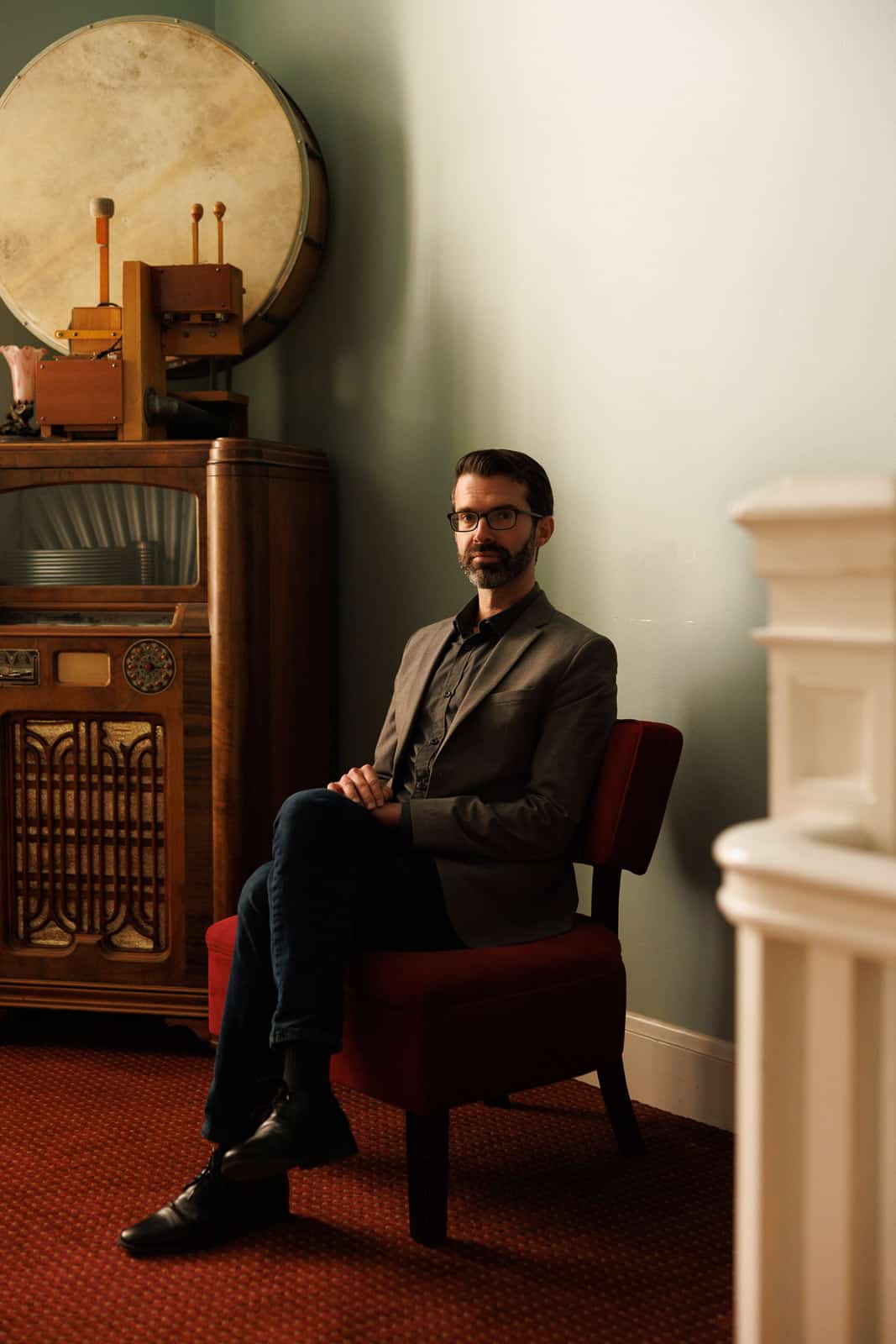
Sakir: Our composer Zach Redler has worked in both the opera and the musical theater worlds, almost 50-50, and his musical language just traverses them both so beautifully. His music is accessible and tuneful and catchy and romantic. It’s everything you want this story to be, and Zach was always our one and only choice for writing this opera. But Zach had never been to Montana. Zach had never fly fished. Zach hadn’t even read the book or seen the movie. To this day, Zach still has never seen the movie. He never wanted the influence of that soundtrack to impact the way he wrote the opera. But when he did read the book, he shared with us immediately that he could already hear the opera in his head. From there it just took off.
At the same time, though, so much of the book takes place on the Blackfoot, in this big, familiar outdoor expanse. How do you go about bringing that experience to a confined space like the Ellen or the Dennison?
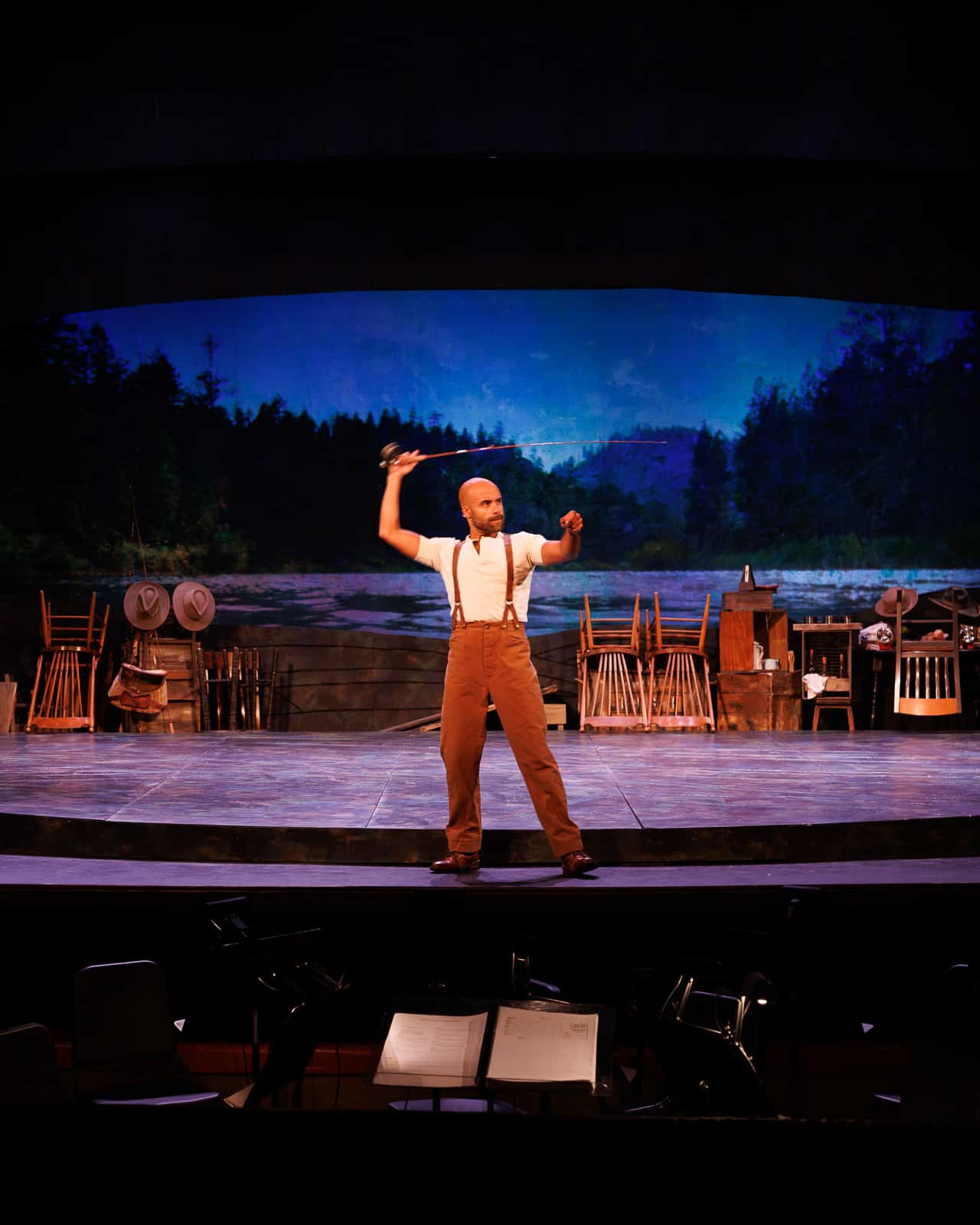
Sakir: We learned quickly, once we started staging rehearsals about a month ago, how just the act of fishing would be challenging because there’s a lot of ways to make fly fishing look really stupid on stage. For example, do you catch fish? What do they look like? How do you actually make the line taut or bend the rod? We learned very quickly that we couldn’t make the line taut, or we couldn’t bend the rod. Those had to be accomplished with video projections.
We actually hired an incredible fly fishing consultant to make it look artful: Jason Borger. Jason was Brad Pitt’s fly fishing double in the film, and Jason just happens to be great friends with our stage director and librettist Matt Foss. Jason worked with our cast on their casting, particularly the actor playing Paul, making him look like the artist with a rod that Paul is. Jason also worked with our video designer on the projections, and that’s Jason being filmed and then integrated into those video projections. So when you see the opera singers playing Paul and Norman casting, the line, the artful beauty of that line, is in the video projections just behind them.
You mentioned the beauty of Maclean’s original words being the real driving force behind this project. Is there any particular line from the opera version that’s really stuck with you? Any good earworms?
Sakir: Earworms! Oh my gosh, this opera is full of them. I keep joking about how, after most contemporary operas, the audience is always complaining how they just wish there was a tune they could hum on their way out of the theater. That’s exactly what we are delivering with this. It’s one tune after another. [Composer] Zach Redler’s ability to write an incredible melody is really unique among living composers today.
In terms of a line or a theme that’s resonated with me most, one theme of the story — and the opera — that makes this very regional story feel universal and relevant today is the idea that help is hard. Something the characters in “A River Runs Through It” struggle with is figuring out how to help each other when they don’t know how to help each other. Norman is struggling to help his brother Paul with his gambling and alcohol addiction, or he’s struggling to help his brother-in-law Neal not feel lost, and so often the answer is to take them fishing, as if that will on some level make things better for each other. That theme is such a big one in the opera that there’s a whole aria the mom, Clara, sings about it. She’s given the longest aria of the opera, and the name of it is “Help Is Hard.”
That’s interesting, because I know the mother was more of a peripheral character in past tellings of this story. It sounds like the opera kind of expands that role?
Sakir: Most of the female characters in the book and in the film are given very little time and very little attention, and the creators of the opera very much intended to change that. They wanted this to be a more three-dimensional perspective on the female characters, and so a character like the mother — who is only referred to as “mother” in the book — is actually given the name Clara. … It’s stunning how the creators have extracted Norman’s text throughout the book to give his mother this scene.
Similarly, Jessie, the character of Norman’s wife, is also elevated in the opera. One of the ways that we worked with John Maclean was to take his book Home Waters, which is a unique perspective into his family that goes deeper than Norman Maclean’s novella, and use that as the inspiration for a lot of Jessie’s character in the opera. Then there’s Old Rawhide. Old Rawhide in the opera is less ridiculed the way she is in the book and the film. She’s sort of recognized as a woman ahead of her time in her approach to love, and she’s even given a real name. Instead of Old Rawhide, her name is Heidi, and she’s given the most catchy of the catchy tunes in the opera, this beautiful country ballad called “Too Much.”
Montana has such a rich anthology of compelling human stories. What is it about this one that doesn’t just keep people coming back to the printed page but inspires people like you to find new ways to tell it?
Sakir: It’s two things for me. One is the theme we already talked about that help is hard, and the family drama that this story is centered around. Most of us probably have a friend or a family member that needs help and we just don’t have the resources to help them, so that’s something I think a lot of people can relate to. Then there’s the intersection of nature and spirituality that so much of this story is based around, and that’s something the opera also dives deep into. It’s something as poetic in Maclean’s novel as whether the words came first or the water, which one is deeper in the earth.
Do you think you’ll make a few new opera converts out of Montana’s fly fishing crowd?
Sakir: Absolutely. I mean, leading up to the premiere in Bozeman, we were in more fly fishing magazines than opera magazines. And I know at the premiere, the last two weekends in Bozeman, the number of new operagoers or new ticket buyers was greater than for any show in our 40-year history. After all the years of sweat and tears and love that went into this, when Montanans are saying that we did justice to Montana’s unofficial state novel, that’s the highest praise we could receive.
On the flip side, do you see “A River Runs Through It” sparking some Montana fever in the opera community? What’s next after this Missoula run?
Sakir: Well, I think it’s a testament to the universality of the opera that there are so many [opera] companies out there expressing their interest. We’ve already got at least one that is planning on it a year from now outside of Montana. I can’t talk about who it is yet, but beyond that, there’s a number of other companies that have expressed their interest as well. My hope is that this will be the next great American opera, and that there’ll be lots and lots of love and attention focused on it. But hopefully not so much that even more people will start moving to Montana. I’ll know that opera is alive and well when that happens to Montana.