The acclaimed Blackfeet and Gros Ventre author James Welch is certainly best known for his novels. His 1974 debut, “Winter in the Blood,” is a founding text of the Native American Renaissance — spare, darkly funny, ruthless in its realism — and “Fools Crow,” his 1986 historical epic, is taught in Native literature courses across the country.
Less known is that Welch, who died in 2003 and spent most of his writing life in Missoula, began his writing career with a collection of poetry. The poems in “Riding the Earthboy 40,” published in 1971, have a musical, stones-tumbling-in-a-river quality and are rooted in the landscapes and cultures of the Blackfeet and Fort Belknap reservations. The hard-edged but graceful, dreamlike but earth-bound poetry was the origin for the alchemical prose that would later move so many of his readers.
The influential poet Richard Hugo, Welch’s creative writing instructor during his time in the University of Montana’s MFA creative writing program, encouraged Welch to lean into the people and places he knew. Few poets were writing so intimately from an Indigenous perspective in the mid-’60s when Welch began writing those poems.
More than 50 years later, “Riding the Earthboy 40” is still in print. It was the book that started everything, and it’s the book at the center of the second installment of the James Welch Native Lit Festival, taking place Wednesday, July 15 through Saturday, July 18 at MAM, Radius Gallery, and Missoula Children’s Theater. The festival’s mission is to celebrate Welch’s body of work along with contemporary Indigenous writers. The inaugural festival took place in 2022, followed by a four-year gap, and had big names like Louise Erdrich and Tommy Orange. This year’s festival features Arthur Sze, Sherwin Bitsui, Jake Skeets, Stephen Graham Jones, Heather Cahoon, and other Indigenous writers, mostly poets, plus special guests such as retired UM creative writing director and former literature professor Lois Welch, James’ widow.
But one new angle on the festival seems to be about Native youth and the importance of laying the groundwork for young Indigenous writers to thrive. There will be free panels on fiction and poetry, readings, and writing workshops for high school students at various venues.
The festival opens with a double screening at the Roxy of Paving the Way, a documentary about skateparks on the Flathead Reservation, followed by Winter in the Blood, the 2013 film adaptation of Welch’s novel by local filmmakers Andrew and Alex J. Smith. Native novelist and short story writer Debra Magpie Earling and skatepark benefactor (and Pearl Jam bassist) Jeff Ament will talk about Paving the Way afterward, and a discussion with the Smith brothers will preview Winter in the Blood.
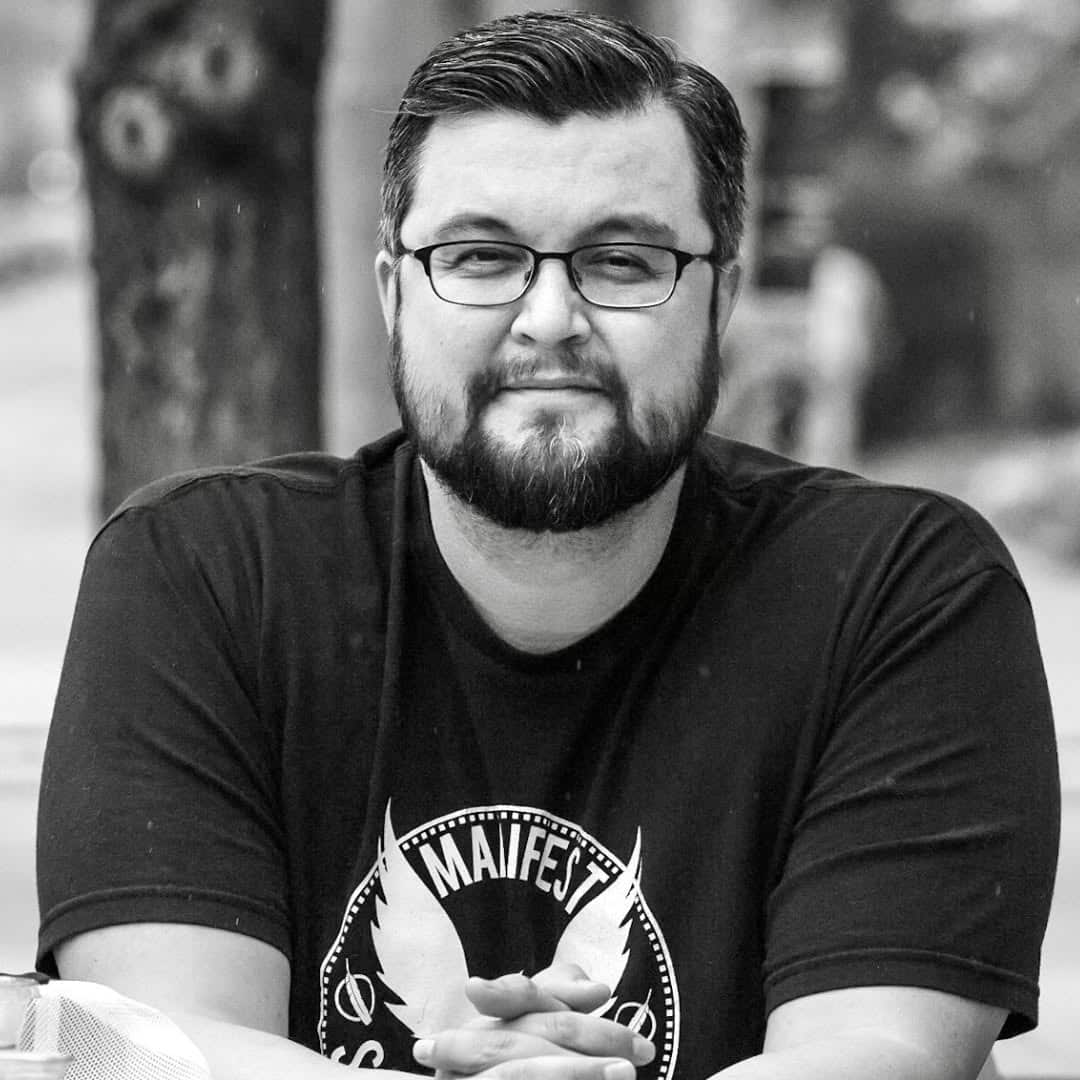
Sterling HolyWhiteMountain — Blackfeet writer, Iowa Writers’ Workshop graduate, Stanford lecturer, and the author of formally audacious fiction that has appeared in The New Yorker, The Atlantic, and The Paris Review — founded the festival. He grew up on the Blackfeet Reservation, as Welch did, and built the festival around a lineage of Indigenous writers mentoring the next generation.
And the stakes of that lineage are high.
“Our economies are fucked, we’re living with and in a political system that doesn’t make sense to us, we have problems with addiction and suicide, but we are making art. That’s how important it is. That’s how much it means to us.”
Several of this year’s participants are connected through the Institute of American Indian Arts in Santa Fe, the only four-year school in the country dedicated to contemporary Indigenous arts. Arthur Sze spent more than two decades there building its creative writing program, mentoring Bitsui and others who have since reshaped American poetry. Bitsui, in turn, mentored Skeets. That lineage — teacher to student to student — runs directly from IAIA’s campus to Missoula this July. It’s a lineage the Trump administration has now twice tried to sever: the FY2027 budget proposal, released this spring, again calls for zeroing out IAIA’s $13.5 million federal appropriation. Congress rejected the same proposal last year and this year is uncertain.
In western Montana, the cuts have already arrived. As we reported last year, the Trump administration terminated an NEA grant to the Missoula Writing Collaborative that funded poetry residencies at six elementary schools on the Flathead Reservation. The NEA’s Creative Writing Fellowships program — which had existed since 1966 — was canceled outright. This is the landscape in which the James Welch Native Lit Festival returns.
We spoke with HolyWhiteMountain about why James Welch still resonates with so many writers, what art means to the American Indian and who he talks to about art and beauty now that Welch is gone. This conversation has been lightly edited for length and clarity.
The Pulp: What work or works of Welch’s speak most to you?
Sterling HolyWhiteMountain: Though I love the fiction, I think my favorite work is “Earthboy.” There is a strange angularity to the poems — the turns and the places we go are unexpected. And there are echoes of the oddness of cadence and phrase you find in the King James Bible. But it’s what drives that work that compels me. “Earthboy” is the angriest of Jim’s work, and the poems are very dark. I wouldn’t call them hopeless, but I wouldn’t call them hopeful either. The poems exist outside of that unsophisticated sense of things that has dominated the discourse around art in America for the past decade or so. Instead, they do what good art does: They resist easy, simplistic analysis. They’re not interested in giving us answers to anything in particular. I read them and they take the top off my head, the way good poems should.
My next favorite work is “Winter in the Blood.” What interests me about “Winter” is that it’s clearly a transitional book at a writing level, one where a writer is moving from lines of poetry to sentences of fiction. It’s a category of book that does the rarest of things: it appeals to both poets and fiction writers. They’re rare books — once the writer has made the transition they never quite go back to that place. We can look at “Earthboy” and see not just a significant work of American poetry, but also a writer discovering his material. That book is a single strike of lightning and the resultant thunder is still rolling.
I understand that you got to hear James Welch speak. Can you talk a bit about that experience?
I only had the privilege of being in the same room with Jim one time. I was an undergrad at UM and there was this class called Montana Writers Live. Each class, a different writer who lived in Montana came in to talk to the class about their process. I had no idea what I was doing, I just had a sense that I wanted to write and so I was going through that process a young writer is supposed to go through, where you don’t know what you’re doing but you’re doing it. And one day Jim came to class and I felt my life change. I saw him sitting there at the front of the room and everything changed. This would have been around 1999, probably. I’m not certain I knew who he was up to that point.
I feel tremendous gratitude for having had the chance to hear him talk. He was deeply familiar to me in the way all Blackfoot people are whether or not I’ve met them, and that moment became a trigger for me thinking deeply about culture and identity, about what makes us us. Of course I would do anything to have a conversation with him now, both because it would be a privilege to talk to an Indian writer who has already been through certain difficulties that I might be going through, but also because I’m in the rare position of being a writer from a tribe who already has a significant American writer. It’s a privilege to be related to him in that way
It would have been good to have him as a friend and an uncle in the Indian way. I have had the great privilege of talking with Lois [Welch, retired director of UM’s Creative Writing Program and James’ widow] over the past few years, and along with hearing stories about Jim’s life and how he came to be James Welch the Writer, we’ve also had running conversations about art and literature and beauty. She’s incredibly sharp about these things, one of those rare people with remarkable perceptions. So, though I did not get to know Jim, I have had the next best thing in my conversations with her.
In an earlier interview you said, “It wasn’t until I read Sherman Alexie’s first book of short stories when I was about 21 or 22 that I realized you could write about Indian country. When everything you read growing up represents something other than what you know, you begin to believe that you don’t exist.” Where does the work of James Welch fit into this paradigm for you?
Jim’s work comes much later for me. I didn’t read “Winter in the Blood” until the year after I finished at Iowa, when I was in Wisconsin [in 2011]. I remember with a kind of ultimate clarity the two nights I spent sitting in my office reading “Winter.” I could not believe writers were not talking about this book. It truly felt like discovering something. Of course I knew about him by then: “Fools Crow” is taught in every respectable Native Lit course. But up to that point I had avoided him, along with pretty much all other Indian writers. It was the move of a young writer who needed to find his own way through the woods. I needed to sort things out for myself — and what that meant, at that time, was not looking at how other Indians were dealing with their subject matter. I didn’t want that influence while I was working.
That’s a stage, anyway. Later on, when you’ve settled into a more personal sense of the language you’re writing in, that relationship becomes less antagonistic. You become grateful, I think, for all of them. Grateful for their influence. Grateful for having lived a life where you got to read these books, think about these things, try your hand at doing it yourself.
Do you have any goals for this year’s James Welch Festival?
The first festival was an unknown for us. There had never been another festival like it in terms of vision and intention. I didn’t have any interest in creating another public space where Indians can gather and feel good about being together. We have powwows for that. And there had never been a festival associated with a major Indian writer in the place where he had spent most of his writing life.
Indians are producing the most interesting art in America right now. One of the first things Indians did as we began to recover from our history with this country is we started making art. Think about that for a moment: Our economies are fucked permanently as far as anyone alive right now is concerned, we’re living with and in a political system that doesn’t make sense to us, we have problems with addiction and suicide that would make most people balk at the level of the soul, but we are making art. That’s how important it is. That’s how much it means to us. I want people to see that, I want people to see how alive and vital our conversations about art and artistic process are.
How did you decide to center poetry this time around?
This was always the intention. I always wanted to focus on fiction one festival and poetry the next. Jim is that rarest of writers, one who wrote significant works in both genres. And because of this his influence runs through both those major threads of literature, over several generations of Indian — and American — writers at this point. So it made sense to separate the two for the purpose of clarity, so we could really think about one and then the other. Also, we are in the lucky place of there being so many Indian writers now that we could not fit them all under the same tent if we wanted, which was not the case when he was still alive.
What does it take to keep an Indigenous literary institution alive in Missoula where there are so many arts nonprofits, and when federal funding conditions have gotten brutal?
As you can probably guess, it’s been much harder for us to find funding this time around. Compared to ’22, there’s almost nothing out there. We have found a way to keep the festival afloat, though. We’re incredibly fortunate. Doing something like this is a big lesson in realizing you can’t do anything that matters on your own.